Parlour Secrets · Tea & Hospitality
Parlour Collections · Volume V
The Ritual of Afternoon Tea
A graceful pause in the day, where warm cups, thoughtful hospitality and unhurried conversation become a tradition worth preserving.
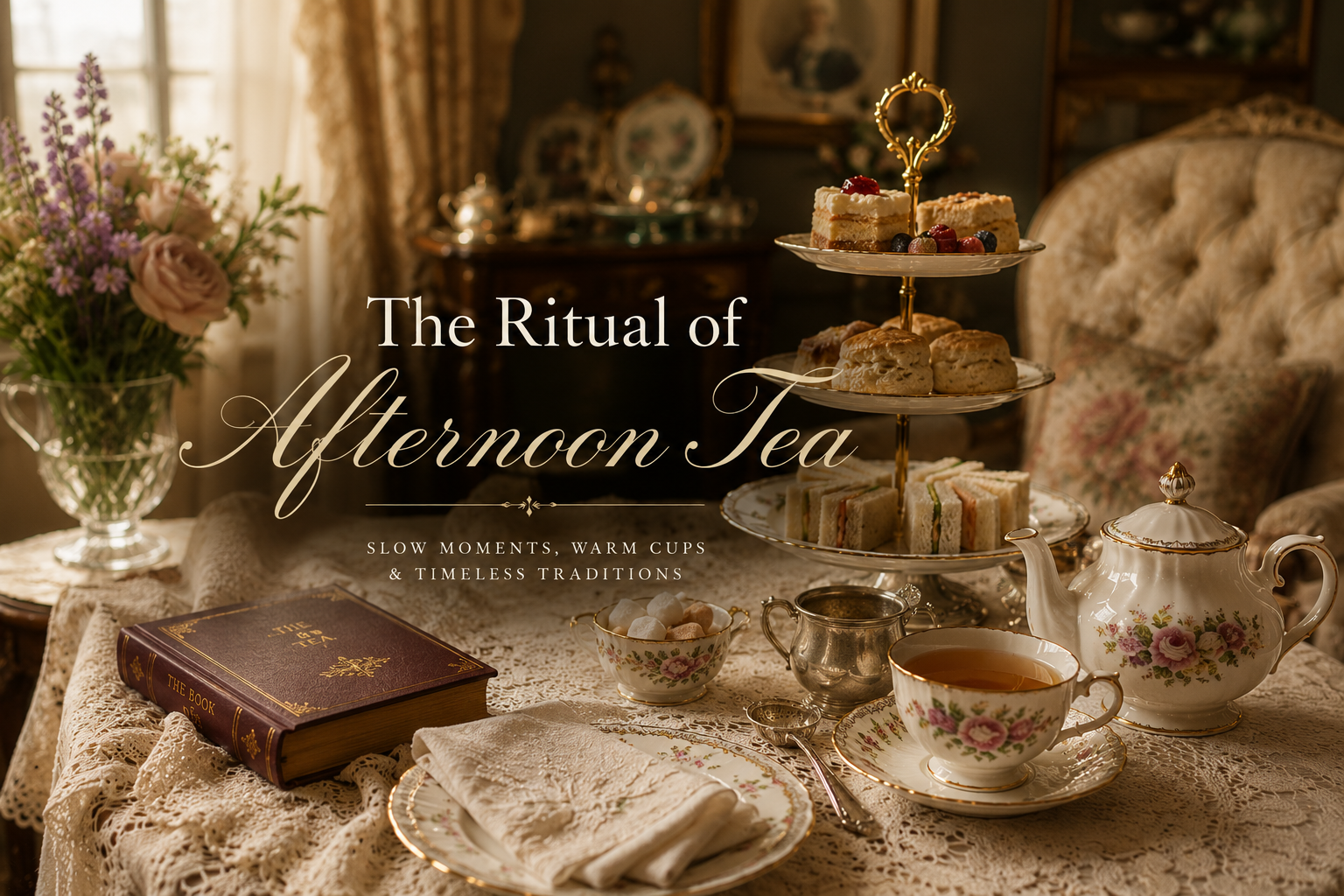
There is a particular civility in stopping for tea. The kettle is filled, the table is prepared and the hurried business of the day is asked to wait outside the parlour door. For a little while, attention turns toward warmth, conversation and the quiet pleasure of offering something lovely to another person.
Afternoon tea need not be elaborate to feel meaningful. It may be a proper gathering with a tiered stand and polished silver, or simply a pot of tea shared beside a window. Its charm comes not from display, but from intention.
The ritual creates a natural pause between afternoon duties and the evening ahead. It encourages us to sit rather than stand, pour rather than rush and listen without keeping one eye on the clock.
Setting the Table
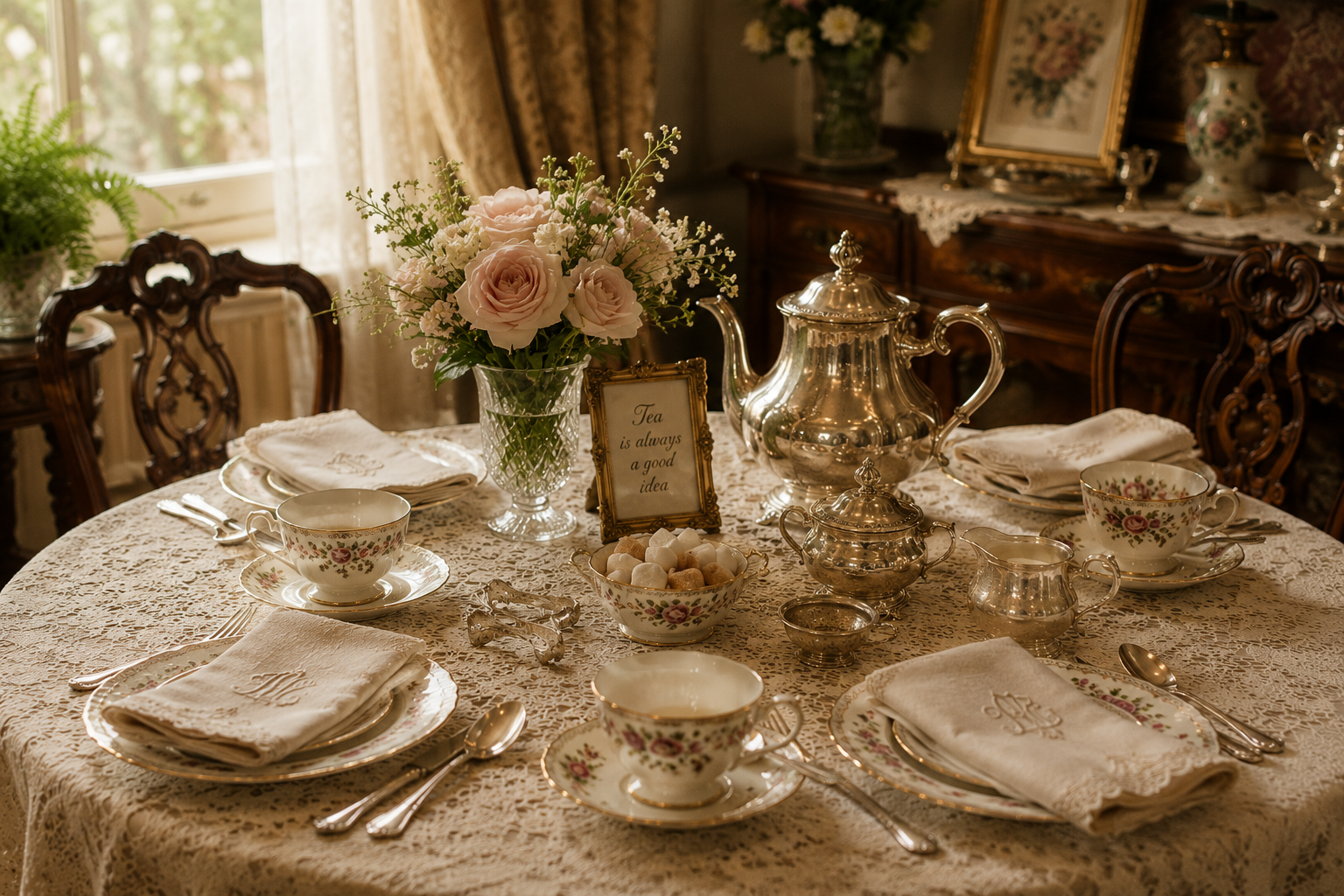
The pleasure of afternoon tea begins before the first cup is poured. Preparing the table allows the host to create a small world apart: orderly, inviting and touched with beauty.
A lace cloth or runner softens the table. Cups and saucers are placed where guests can reach them comfortably. Napkins are folded simply, and a small arrangement of flowers brings freshness without interrupting conversation across the table.
Everything need not match perfectly. In fact, a collection of treasured pieces often feels warmer than a formal service used only on special occasions. A favourite teapot, inherited spoons and cups gathered over time can tell a household story of their own.
A welcoming tea table might include:
-
A cloth or runner.
Lace, linen or softly patterned cotton establishes an immediate sense of care. -
Cups, saucers and small plates.
Set each place before guests arrive so the table feels calm and complete. -
A teapot, milk jug and sugar bowl.
Keeping the service together makes pouring graceful and unhurried. -
Fresh flowers.
Choose a low arrangement of roses, garden flowers or greenery that allows guests to see one another. -
Cloth napkins.
A neatly folded napkin adds refinement and is also more useful than a decorative paper substitute.
Tea is often remembered less for what was served than for how warmly one was received.
The Perfect Tea Service
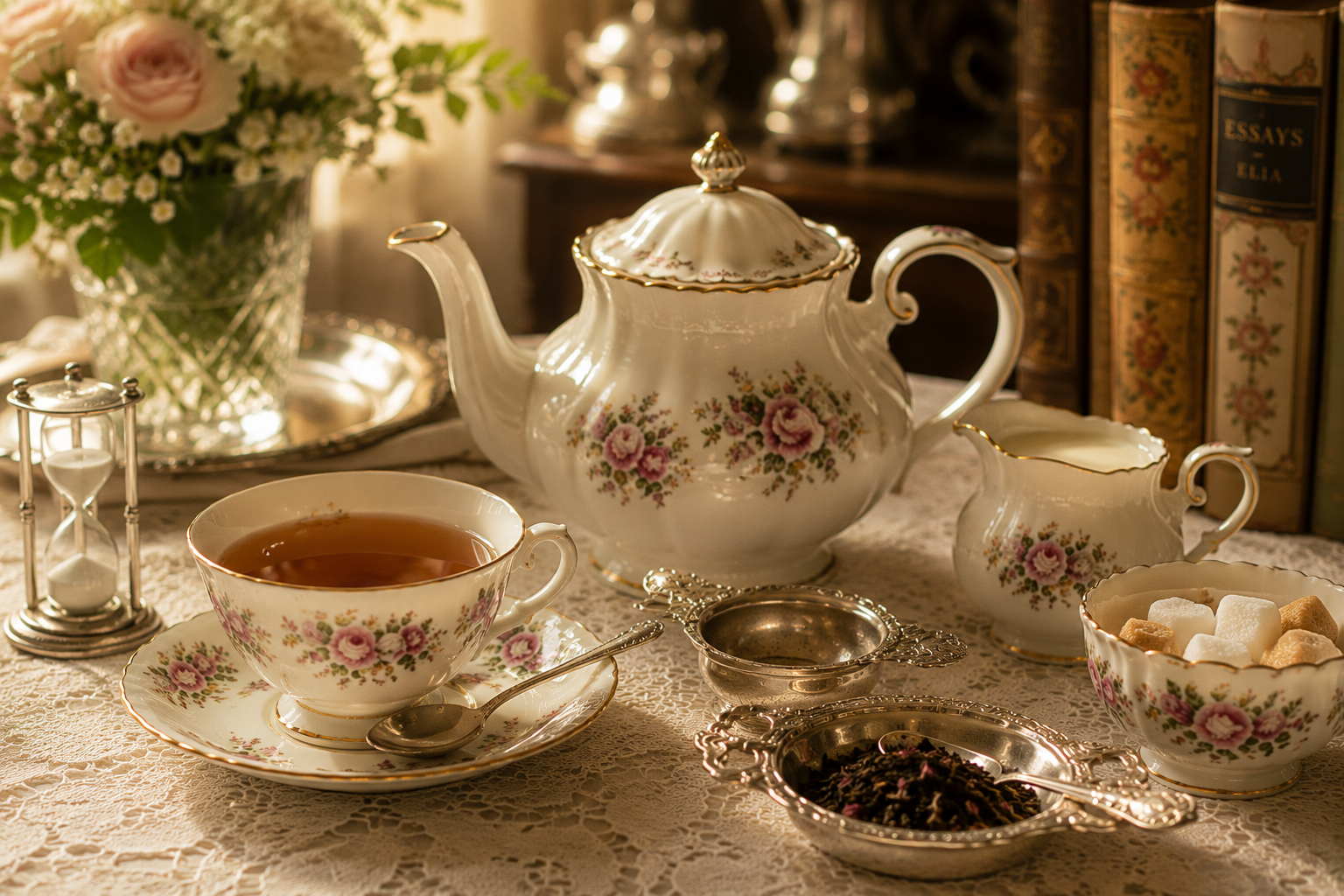
A good tea service is practical before it is ornamental. The teapot should pour cleanly, cups should feel pleasant in the hand and the necessary accompaniments should be close enough that no guest needs to reach awkwardly across the table.
Warm the teapot first with a little hot water, then empty it before adding the tea. This small step helps maintain an even temperature. Loose-leaf tea may be placed directly in the pot or contained in an infuser, depending upon the variety and the preference of the host.
Pour for each guest rather than passing a full pot around the table. Ask whether milk, lemon or sugar is desired, and allow personal taste to outrank rigid rules. Hospitality should make a guest comfortable, not self-conscious.
Savoury and Sweet
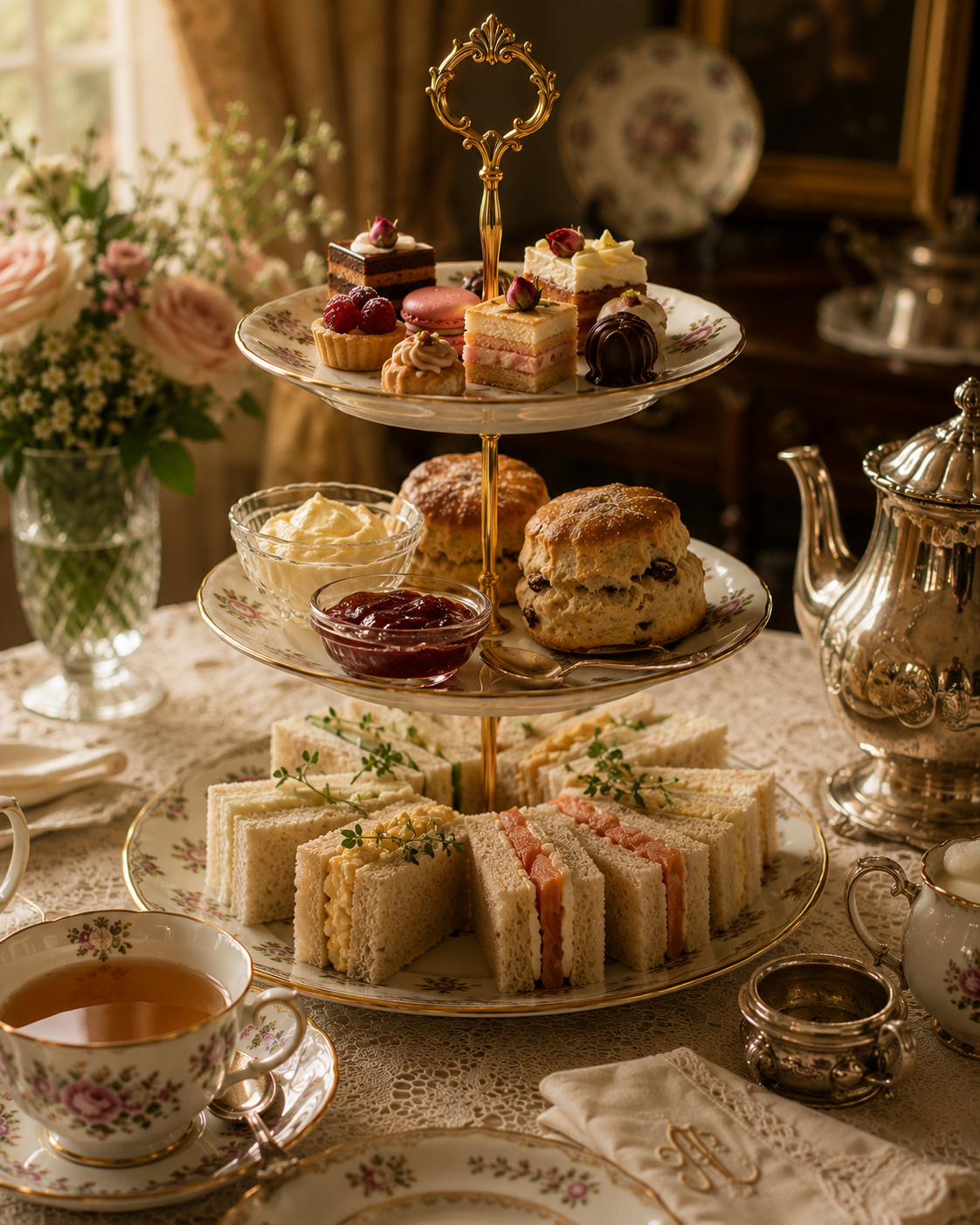
The traditional tea table offers a pleasing progression from savoury to sweet. Finger sandwiches are light enough to begin the meal without overwhelming it. Scones follow, served warm when possible with preserves and cream. Small cakes or pastries provide a delicate finish.
Variety matters more than abundance. Two kinds of sandwiches, a basket of scones and one or two modest sweets are enough for an intimate gathering. Small portions allow guests to taste everything without turning a gentle tea into a heavy meal.
Cucumber, egg and cress, smoked salmon or finely sliced ham all suit the occasion. Cakes should be easy to lift and eat from a small plate. The food should support conversation rather than demand constant attention from the host.
The Joy of Conversation
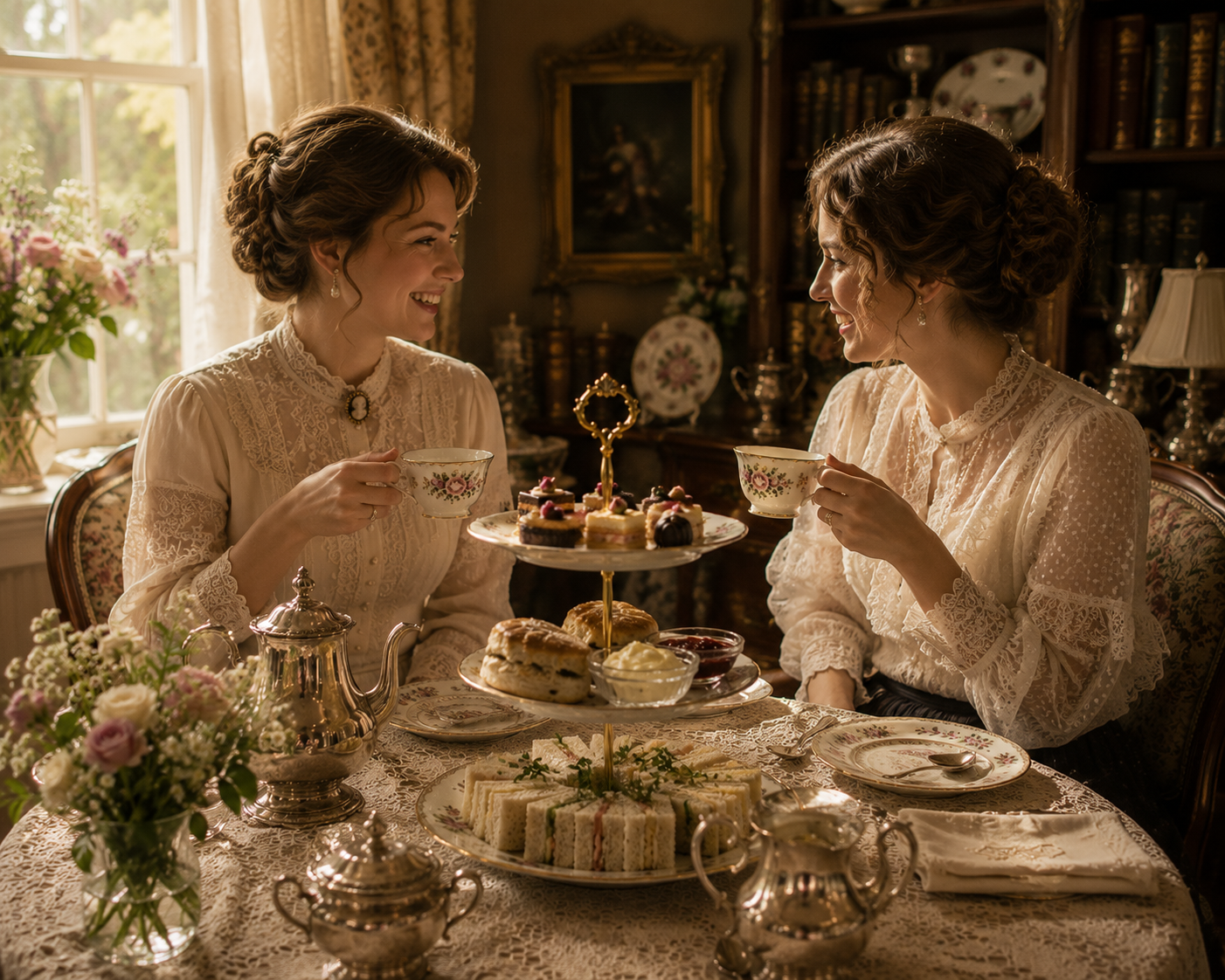
Afternoon tea creates a natural setting for the kind of conversation that cannot be hurried. Cups are refilled, small plates are passed and pauses arrive without awkwardness. The ritual gives everyone something to do while allowing attention to remain with the people around the table.
The finest host does not dominate the gathering. She draws quieter guests into the conversation, notices when a cup is empty and allows a subject to unfold without rushing toward the next one.
Such hospitality is not performance. It is the art of helping others feel at ease. Long after the flavour of the tea has been forgotten, guests remember whether they felt heard, welcomed and restored by the time they spent together.
A Closing Reflection
Make Room for the Pause
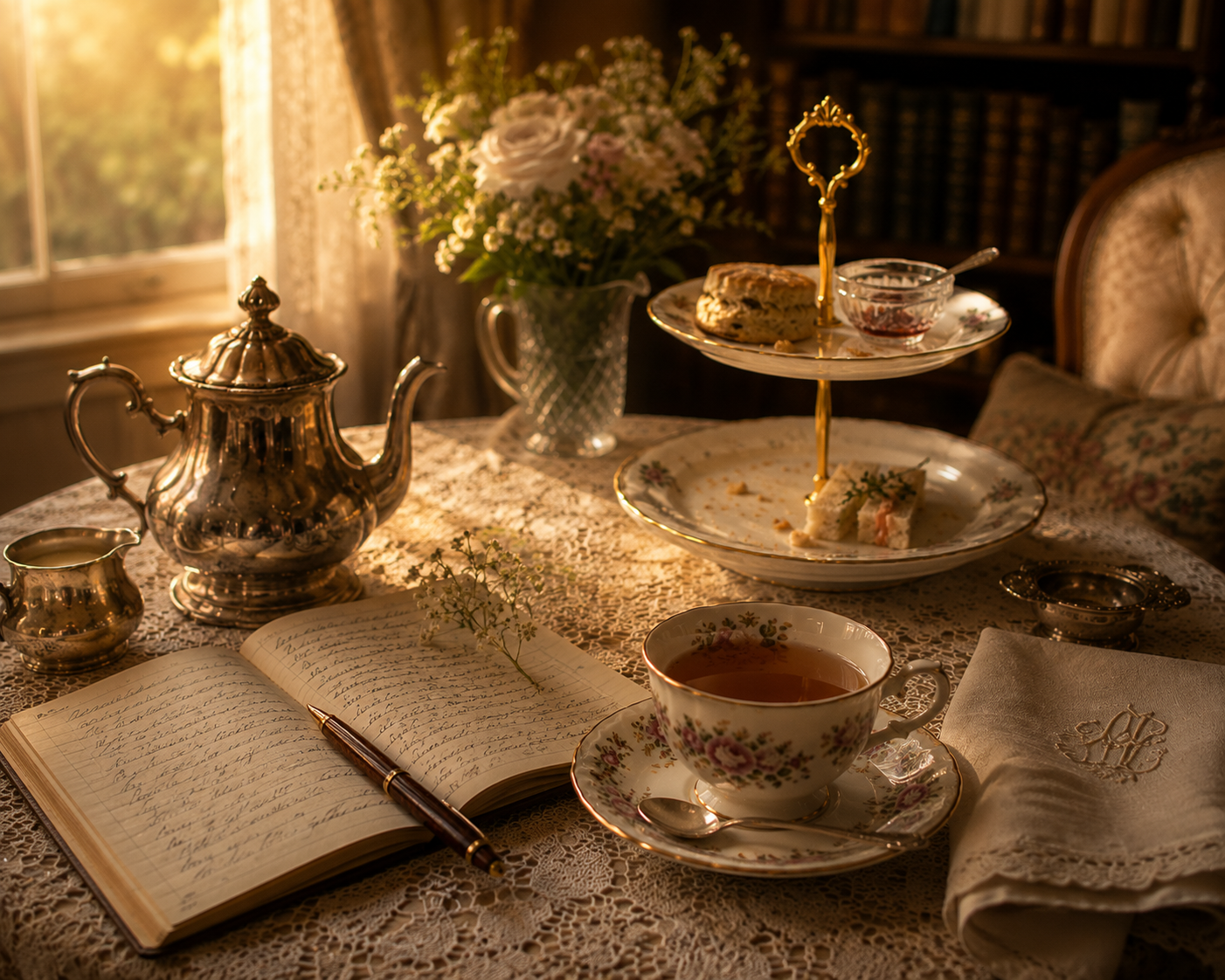
We need not wait for a formal occasion to bring afternoon tea into our lives. A quiet pot shared with a friend, a cup beside an open book or a small tray carried into the garden can preserve the spirit of the tradition.
Set the table with what you already own. Warm the pot. Add something simple to eat and invite one person to sit without hurry. The ceremony may be modest, but the pause itself is generous.
In a world that measures value by speed, afternoon tea reminds us that some of the best hours are those we refuse to rush.
The finest tea services are remembered not because the china was expensive, but because everyone lingered a little longer than they intended.
From the parlour, with the kettle on.
Join the Monthly Newsletter