Parlour Secrets · Home & Daily Life
The Quiet Art of Homemaking
A gentle celebration of useful work, familiar rhythms and the small acts of care that turn a house into a deeply comforting home.
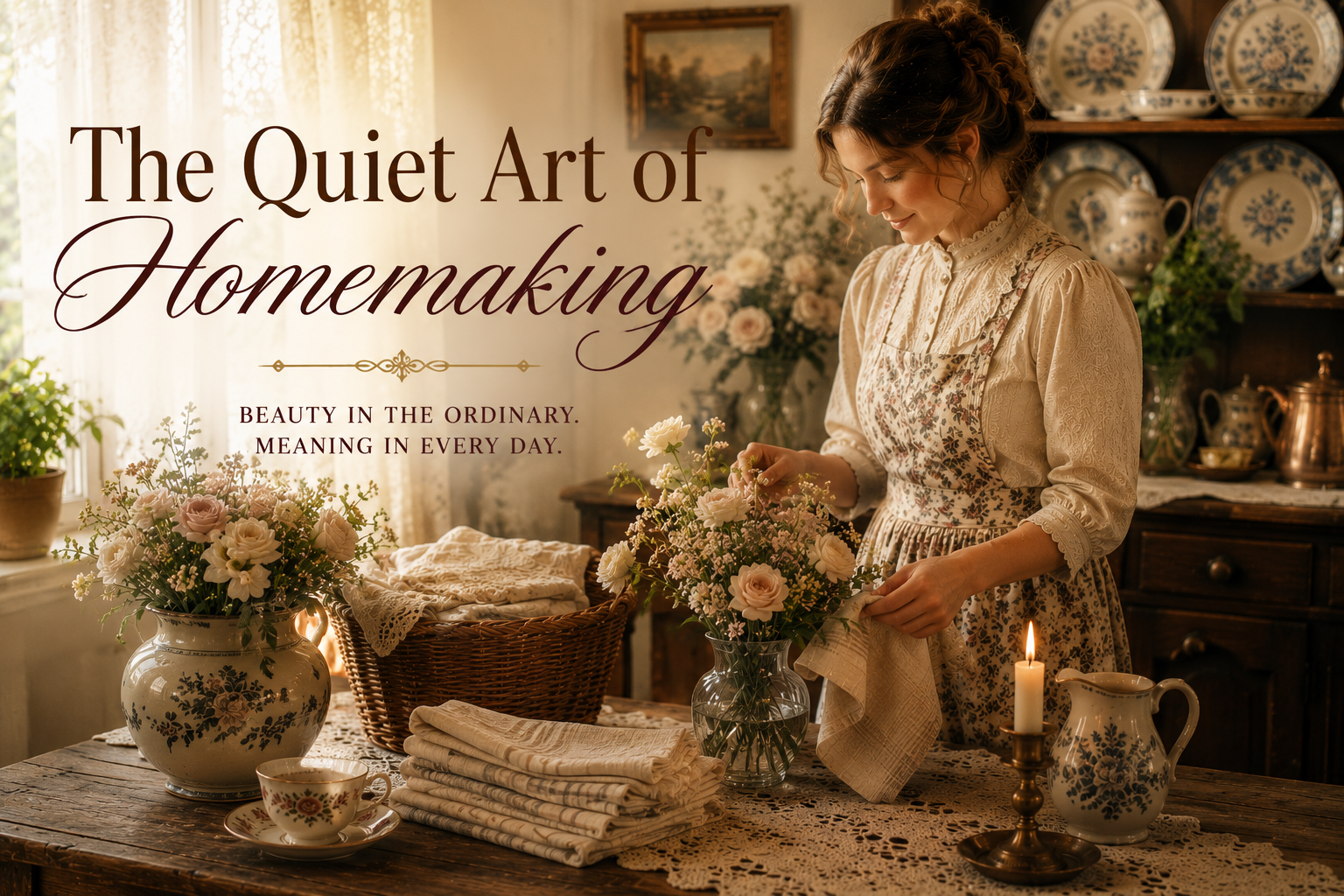
A well-kept home is not necessarily spotless, fashionable or grand. It is a place where the daily needs of life have been thoughtfully considered: where clean linens wait in the cupboard, the kettle is easy to find and a chair has been drawn near the light.
Homemaking is often described through a list of tasks, yet its deeper purpose lies beyond the work itself. Sweeping a floor, setting a table, preparing supper or opening the curtains each morning creates an atmosphere in which people can rest, gather and feel that they belong.
The quiet arts of the home are rarely dramatic. Their results are often noticed only when they are absent. Yet through repetition, small acts of care become the steady framework of domestic life.

The Daily Rhythm
Every household develops a rhythm. Morning light enters, beds are straightened, dishes are washed and rooms are restored after use. These recurring tasks can feel endless when viewed only as chores, but they can also become gentle markers that carry the day forward.
A dependable routine reduces the burden of constant decision-making. When certain tasks have a natural place in the week, they no longer gather into an overwhelming demand. A basket of laundry is folded before it becomes several baskets. The table is cleared before the evening grows late.
Rhythm does not mean rigidity. It simply gives ordinary work a shape, leaving more room for rest, conversation and the unexpected needs of the people who share the home.
A gentle household rhythm might include:
-
Opening the curtains each morning.
Light and fresh air help the home feel awake before the day begins. -
Restoring rooms after use.
Returning a few things to their places prevents disorder from becoming discouraging. -
Keeping laundry moving in small amounts.
Washing, drying and folding regularly makes the task far less burdensome. -
Preparing tomorrow before evening ends.
A clear table, filled kettle or laid-out breakfast bowl brings ease to the next morning. -
Leaving time for rest.
A household routine should support life, not consume every quiet hour within it.
The character of a home is formed through the small things done with care, day after ordinary day.

Caring for the Home
Caring for a home means tending to what is already present. Furniture is dusted rather than constantly replaced. Linens are aired, repaired and folded. A favourite cup is washed carefully because it has served the household well.
This attention creates a relationship with ordinary possessions. Objects cease to be disposable background and become familiar companions in daily life. A wooden table gathers marks from meals, letters and family work. A pitcher returns to the table each summer holding garden flowers.
The goal is not preservation at the expense of use. A home should show signs of being lived in. Care simply allows useful and beautiful things to remain part of that life for longer.

Beauty in Useful Things
The most satisfying homes often find beauty in objects that work hard. A basket carries laundry and later holds blankets. A pitcher pours water and then receives flowers. A worn wooden spoon bears the history of countless meals.
Useful things need not be plain, and beautiful things need not be fragile. Natural materials such as wood, linen, pottery, brass and wicker grow richer through use. Their marks and softened surfaces become part of their character.
Choosing fewer, better household objects also reduces visual noise. When the pieces left in view are both attractive and useful, open shelves and worktables feel intentional rather than cluttered.

The Comfort of Routine
Familiar work has a quiet comfort of its own. Hands remember how to knead dough, fold linen and set the table. The body settles into a rhythm, and the mind is given room to wander, pray, reflect or simply rest from constant stimulation.
Repetition can feel dull when every task is judged by novelty. Yet routine also creates continuity. The same recipe is made through changing seasons. The table is laid for ordinary meals and important celebrations alike. In this way, household habits become part of a family’s memory.
The comfort lies not in doing everything the old way, but in allowing certain dependable practices to anchor the home amid change.
A Closing Reflection
Let the Home Settle at Evening
At the end of the day, the home need not be flawless. It need only be ready to offer rest.
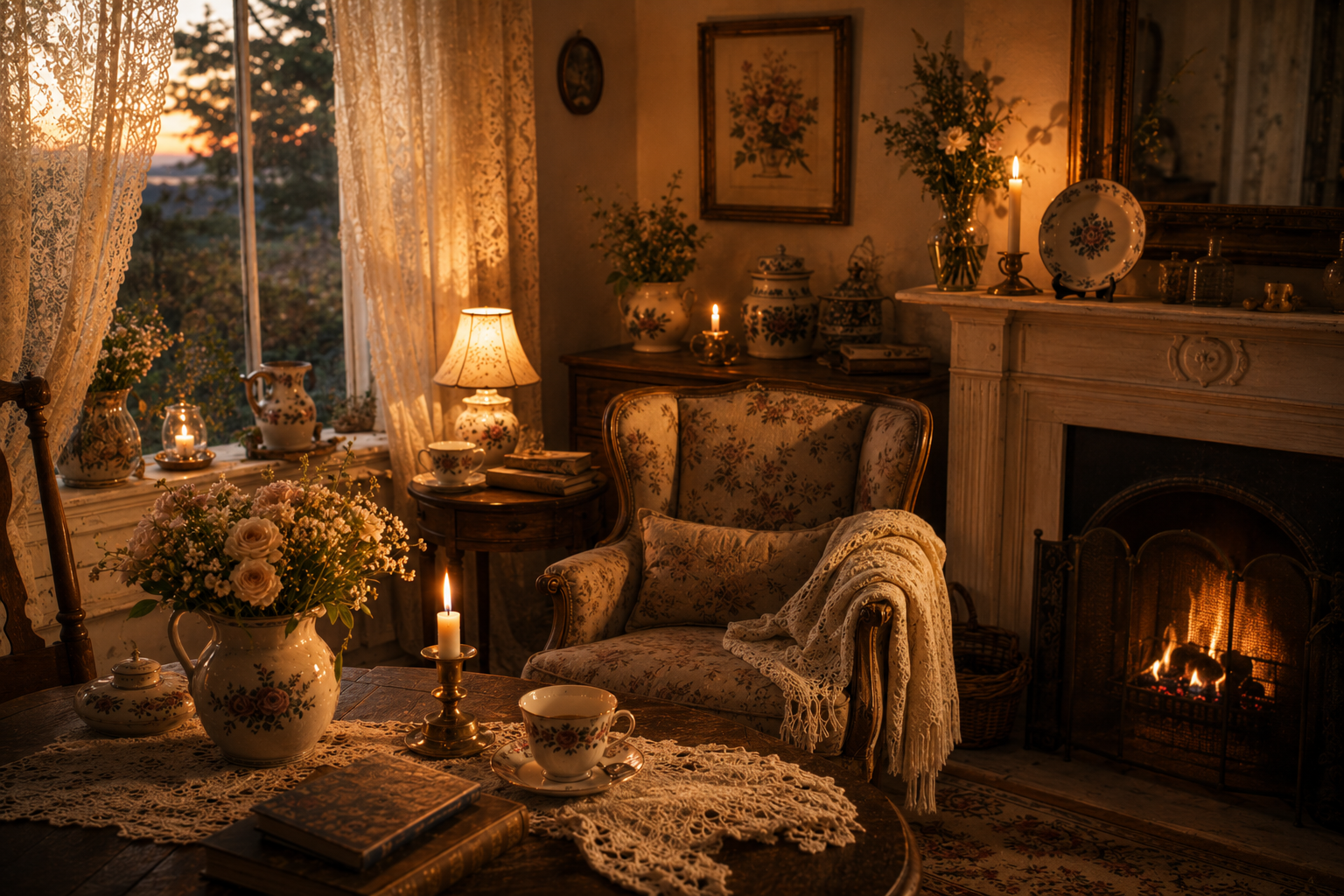
Clear one surface. Fold the throw. Put away what can easily be returned to its place and leave tomorrow’s larger work for tomorrow. Light a lamp or candle, make a warm drink and allow the rooms to soften with the evening.
Homemaking is not measured by how much was accomplished, but by the quiet sense of care left behind. In that atmosphere, even the simplest home can become a place of deep comfort.
The deepest comfort of a home is rarely found in perfection. It is found in the quiet evidence that someone has noticed what was needed and cared enough to attend to it.
From the parlour, with the lamps lit.
Join the Monthly Newsletter