Parlour Secrets · Writing & Reflection
The Parlour Writing Desk
A thoughtful place for letters, journals and the quiet ideas that reveal themselves only when the world grows still.
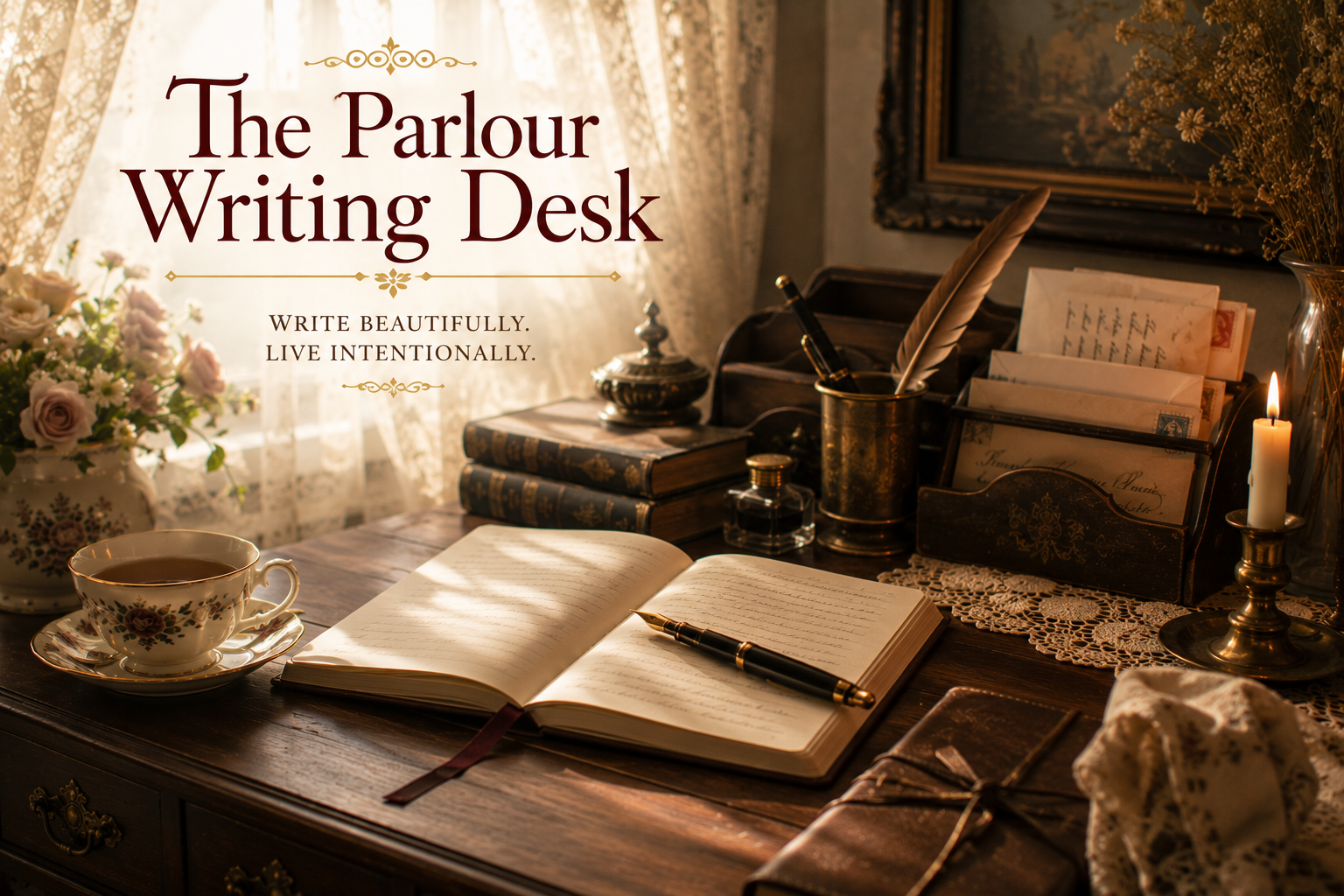
There is something reassuring about a desk kept ready for writing. The paper is close at hand, the pen rests where it can easily be found and the small business of correspondence has a proper place within the home.
In an earlier household, the writing desk served many purposes. Letters were answered, accounts recorded, invitations prepared and private thoughts gathered into journals. It was both a practical station and a small territory of one’s own.
A parlour writing desk today need not be large or antique. Its character comes from intention. When writing materials are arranged beautifully and kept within reach, the act of sitting down to write becomes easier to begin and more pleasant to continue.
Choosing the Desk
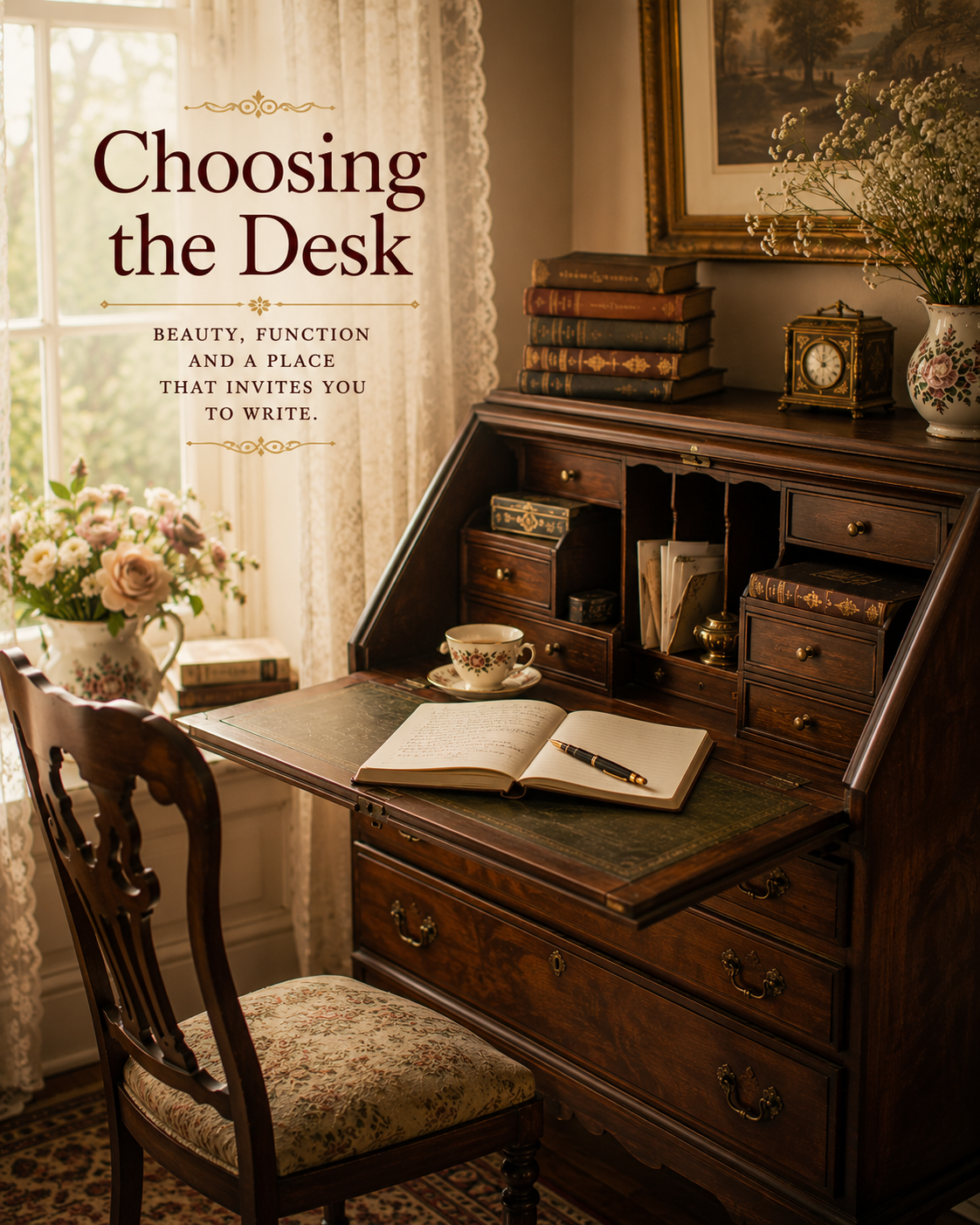
The best writing desk balances beauty with usefulness. It should provide enough space for an open journal or sheet of stationery while keeping pens, envelopes and small tools close enough to reach without interrupting thought.
A secretary desk is especially suited to correspondence because its drawers and compartments provide natural order. When closed, it conceals unfinished work; when opened, it creates a private little room within the room.
A simpler table can serve just as well. Place it beside a window where daylight falls across the writing surface, or near a lamp that gives warm, steady illumination in the evening.
A useful writing desk should offer:
- A comfortable writing height.
The chair and desk should allow the shoulders to remain relaxed while the hand moves freely across the page. - Enough surface for the current task.
Leave room for paper, a pen and perhaps one reference book without crowding the work. - Drawers or compartments.
Small storage spaces keep stationery and tools organized without leaving the desktop cluttered. - Good natural or lamplight.
Clear light reduces strain and makes the desk pleasant to use throughout the day. - A quiet position.
A desk away from the busiest household traffic makes it easier to gather one’s thoughts.
A desk becomes a private room the moment one sits down with a blank page and something honest to say.
Tools of Correspondence
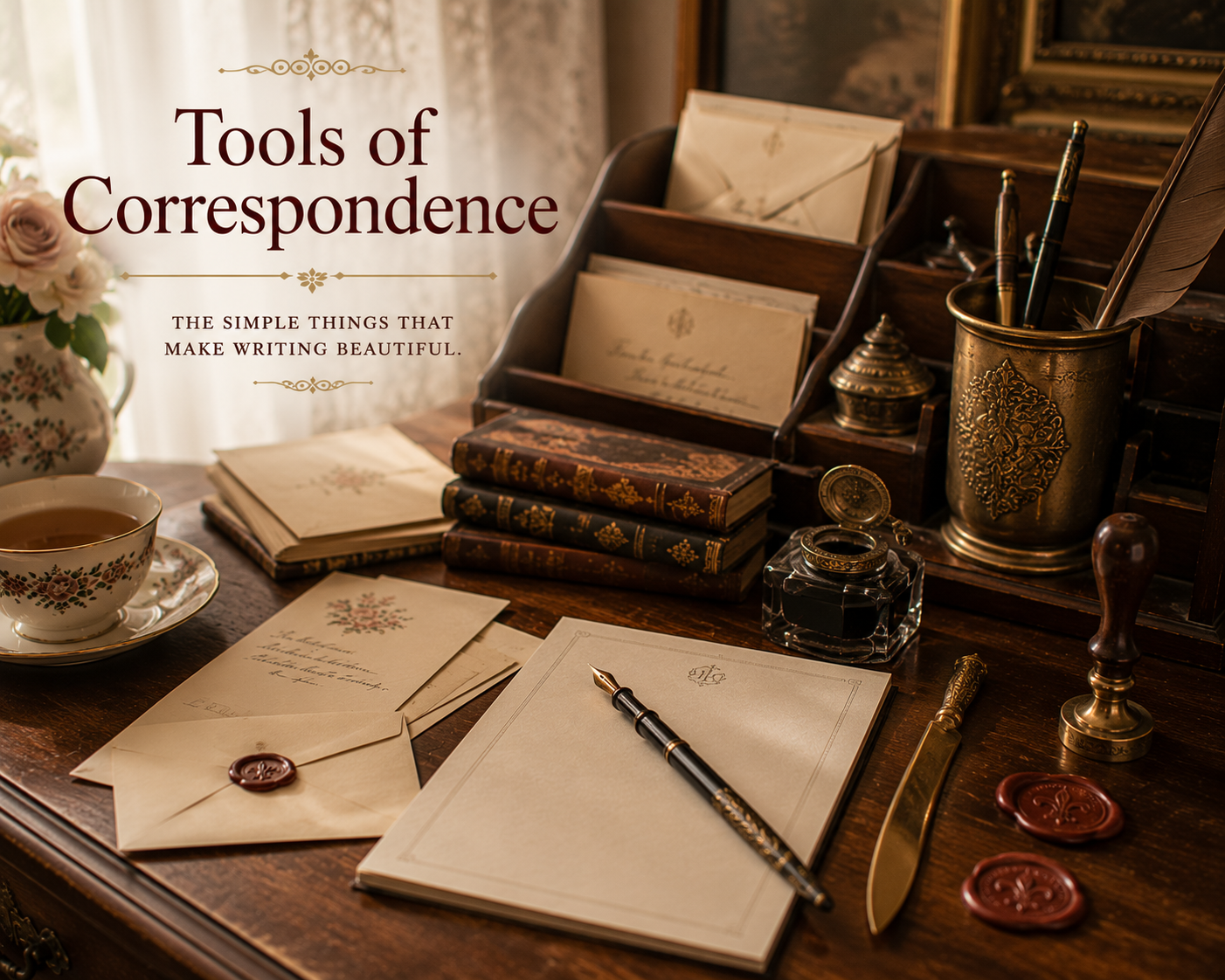
Writing becomes a pleasure when the tools themselves feel dependable and inviting. A pen that moves smoothly across the page, paper with a pleasant weight and envelopes that close neatly all encourage more deliberate words.
There is no need to collect every accessory at once. Begin with the essentials and allow the desk to grow slowly through use. A favourite pen, a box of cream stationery and a journal may be all that is required.
Wax seals, letter openers and traditional desk pieces add ceremony, but they should remain useful rather than merely decorative. The beauty of a writing desk lies in seeing good tools quietly performing their work.
Order and Beauty
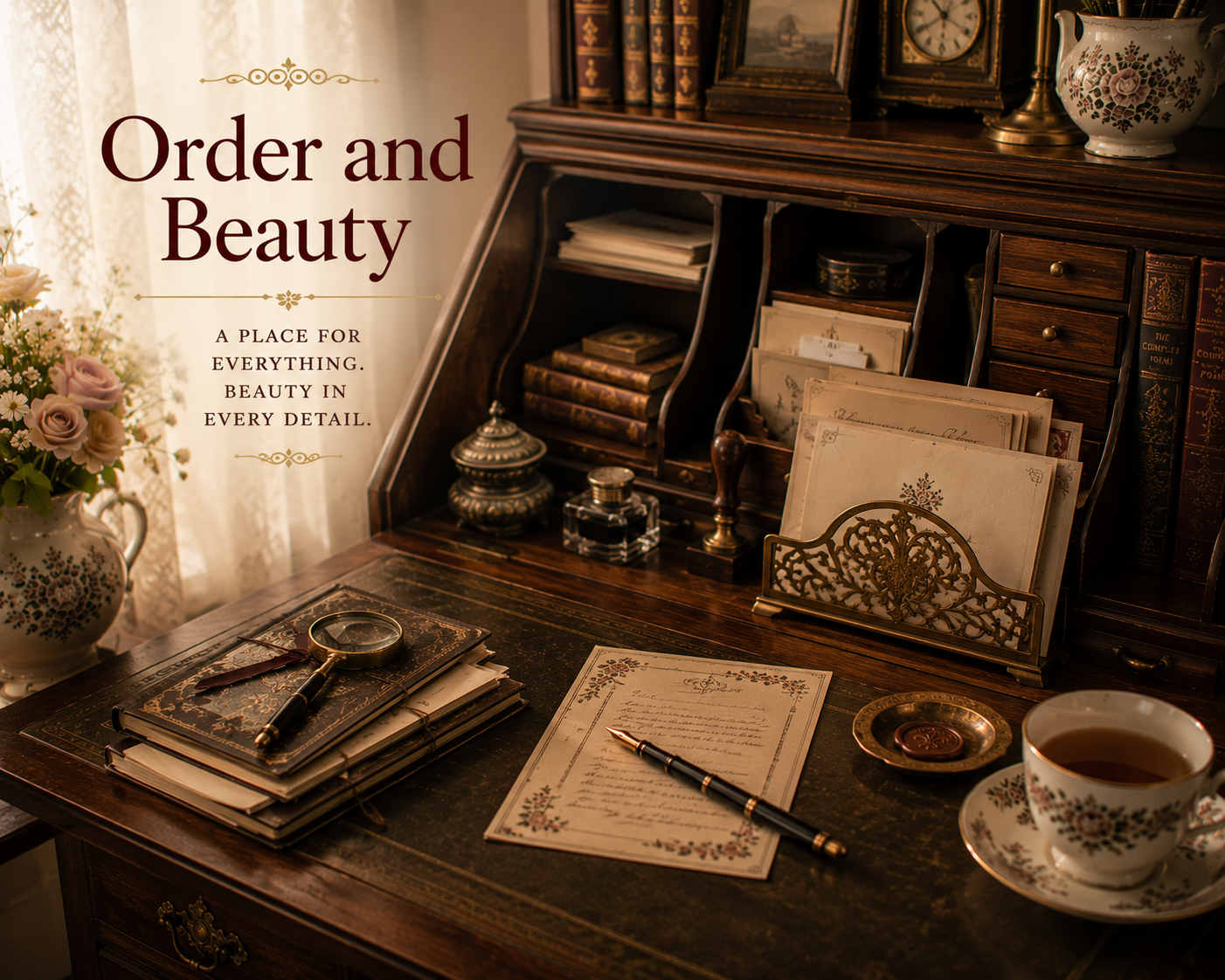
A writing desk should remain ready rather than perfectly empty. Order means that every necessary item has a place and that the current task can begin without first clearing away unrelated clutter.
Keep unanswered letters together, finished correspondence in another compartment and blank stationery protected from dust or damage. Pens may stand in a small cup, while stamps and sealing pieces belong in a shallow drawer or lidded box.
Beauty can be introduced through a vase of flowers, a framed photograph, a small clock or one treasured book. These details should support the atmosphere of the desk rather than consume the space needed for writing.
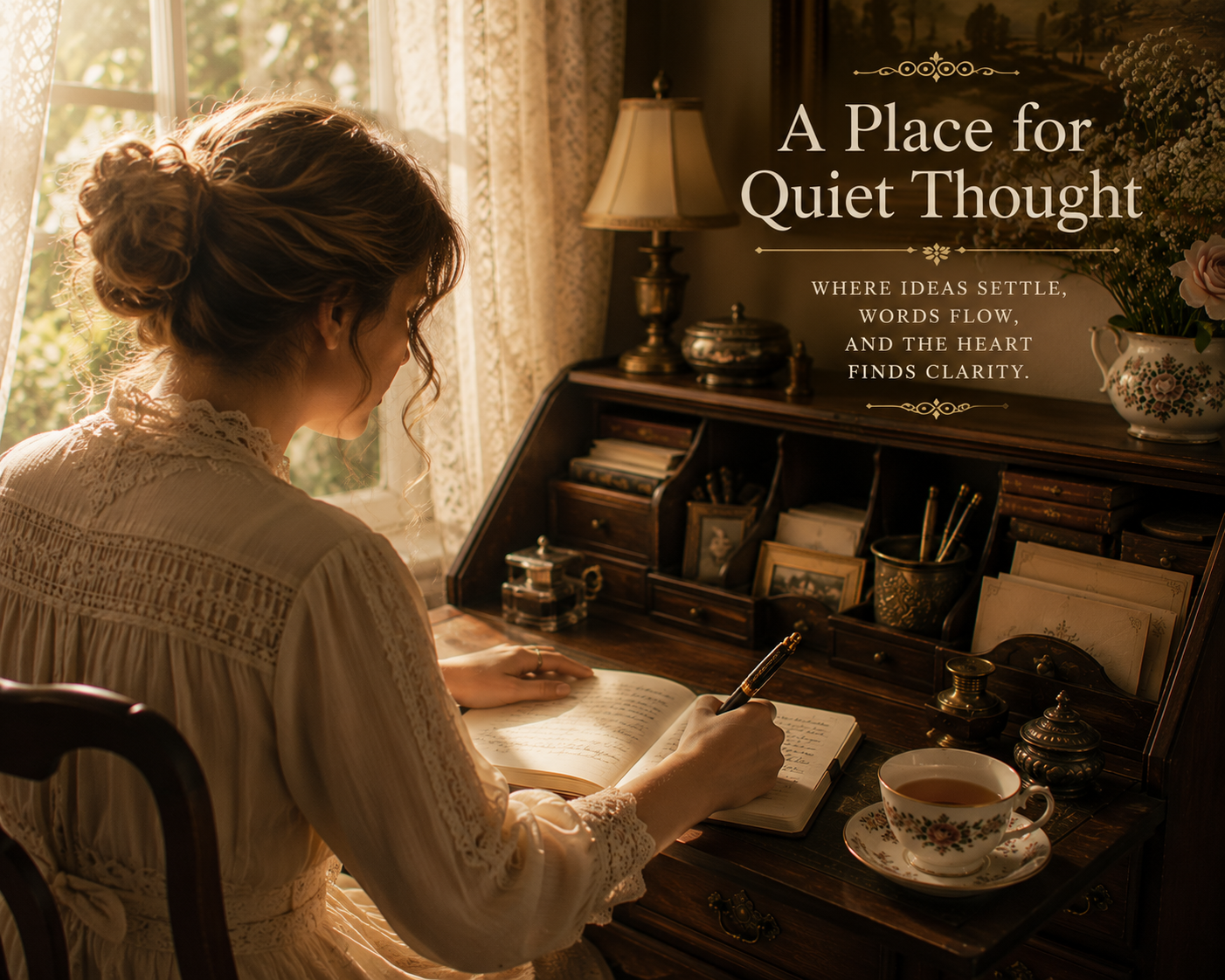
A Place for Quiet Thought
A desk offers something increasingly rare: a place where a thought may remain unfinished long enough to become clear. Sitting before a blank page asks the mind to slow down and listen before rushing toward an answer.
The writing need not be important or intended for anyone else. Journaling, copying a meaningful passage, recording family memories or describing the day can all cultivate attention.
Over time, the desk gathers an atmosphere created by repeated use. It becomes associated with reflection, correspondence and the quiet work of understanding one’s own thoughts.
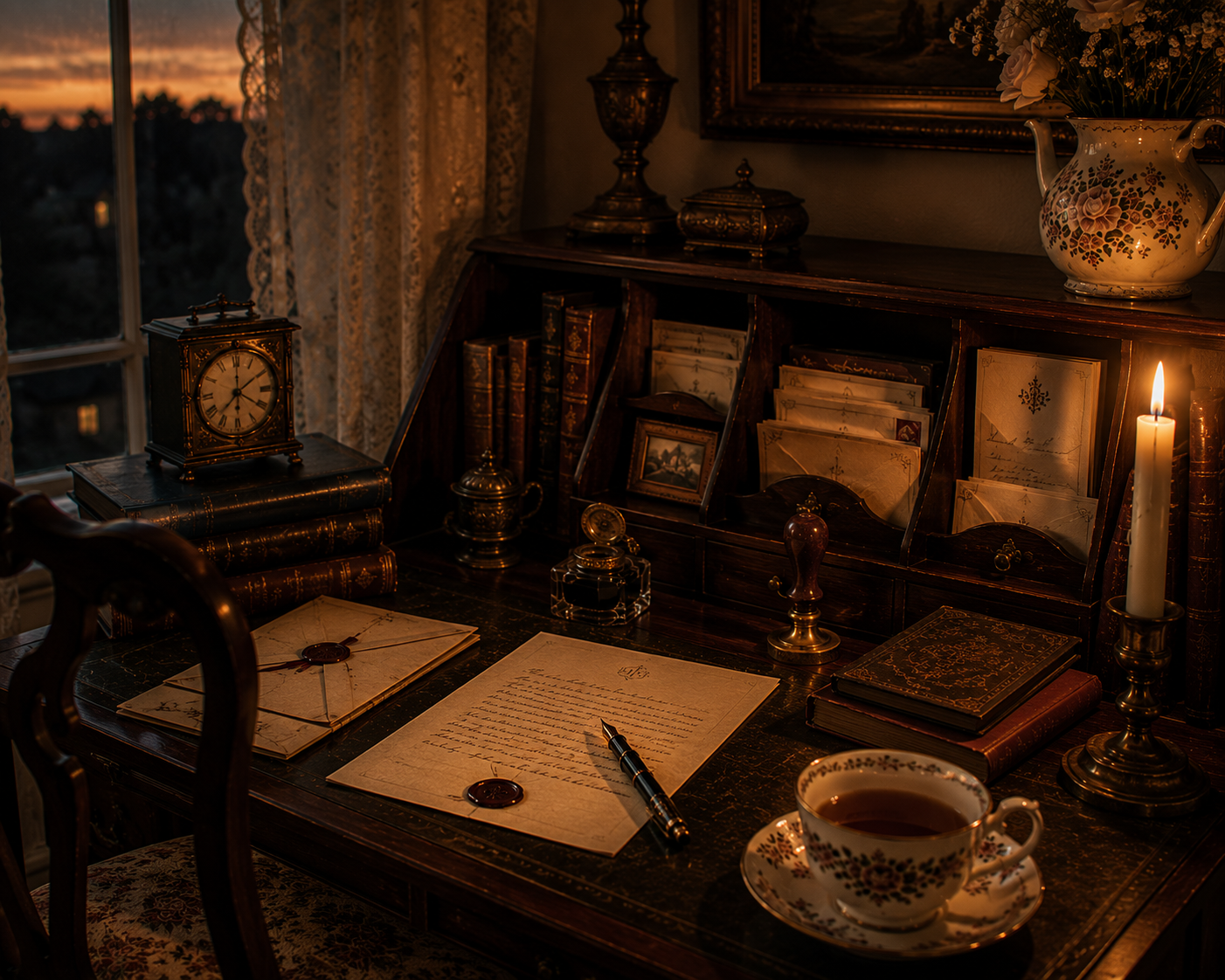
A Closing Reflection
Leave the Desk Ready
At evening, gather the pages written during the day. Seal the letter, close the journal or place an unfinished thought where it can be found again tomorrow.
Return the pen to its holder. Stack the stationery neatly. Leave the desk with a clear space at its centre, as though preparing a welcome for whatever words may arrive next.
A writing desk does not demand brilliance. It asks only that we sit, attend and give language to what might otherwise pass unnoticed.
There is a peculiar comfort in returning to the same writing desk day after day. The ink changes. The seasons change. We ourselves change. Yet the desk quietly waits, asking only that we sit for a while and give shape to the thoughts we might otherwise lose.
From the parlour, with pen in hand.
Join the Monthly Newsletter