Parlour Secrets · Letters & Correspondence
The Lost Art of Letter Writing
A gentle return to thoughtful words, beautiful paper and the quiet pleasure of sending a piece of oneself across the miles.
There was once a particular hush that settled over a writing desk when a letter was begun. Paper was chosen, the pen was filled and a few private moments were set apart from the ordinary demands of the day. The writer did not simply pass along information. She considered another person carefully enough to gather her thoughts, shape them into words and send them out into the world.
Today, a message can travel across a continent in an instant. That convenience is useful, certainly, but speed has quietly altered the character of our correspondence. We answer while distracted, shorten our thoughts and allow meaningful exchanges to disappear into an endless stream of notifications.
A handwritten letter asks something different of us. It asks us to pause. It invites us to notice what we truly wish to say. And when it arrives, it gives its recipient something rare: evidence that another person stopped, sat down and thought of them.
Why Letters Mattered
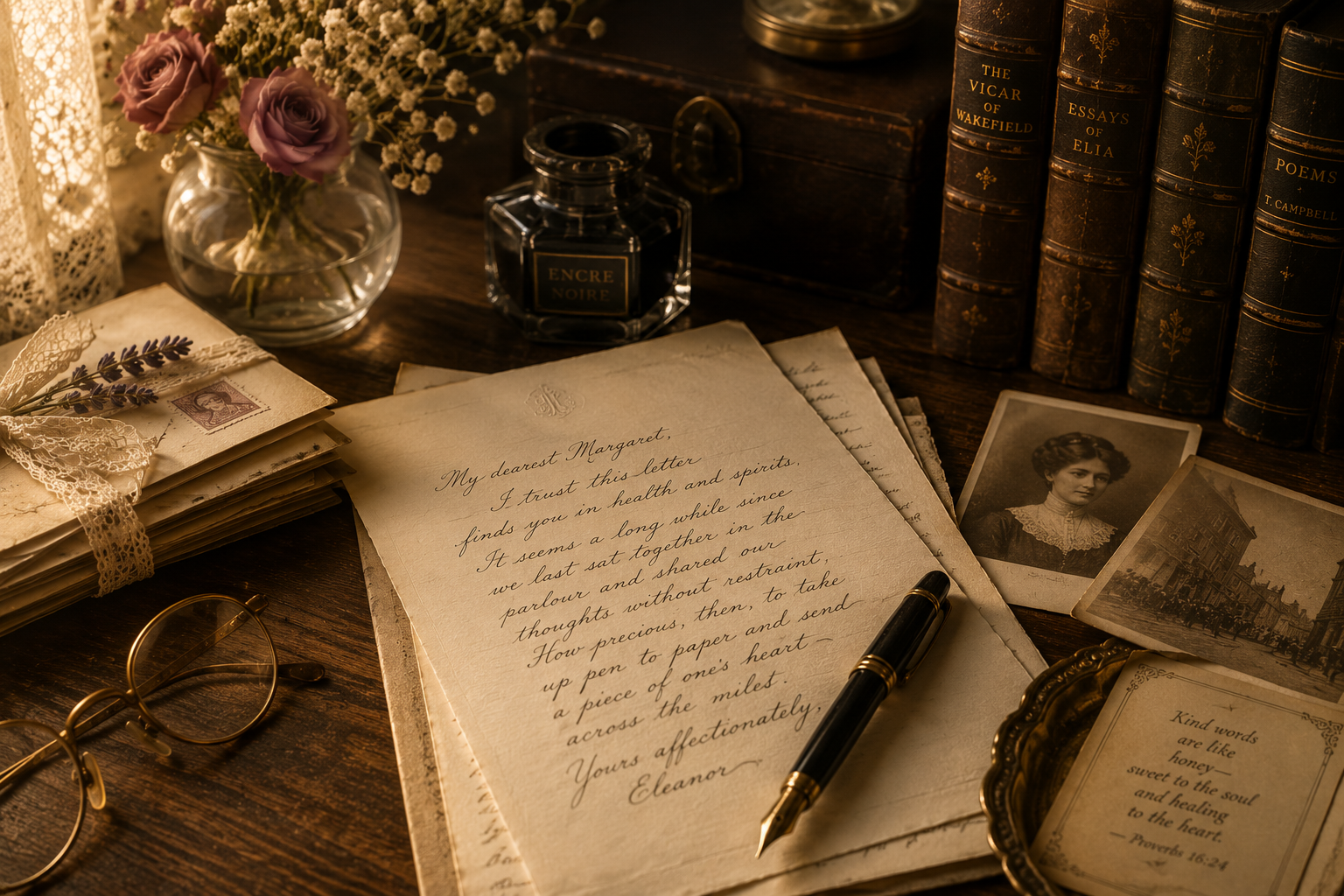
Before the telephone entered every home, letters carried the everyday life of families and friends. They announced births, described journeys, shared household news, offered counsel and preserved the small details that official histories usually overlook.
A letter allowed conversation to continue across distance, but it also did something more subtle. Because writing required reflection, people often expressed thoughts on paper that might have gone unspoken in a hurried conversation. Affection could be stated plainly. An apology could be considered. Advice could be given with tenderness rather than impatience.
These pages became keepsakes. They were folded into drawers, tied with ribbon and reread years later. Through them, a familiar voice could return long after the writer had left the room—or even the world.
The written word gives memory a place to live.
The Pleasure of a Proper Writing Desk
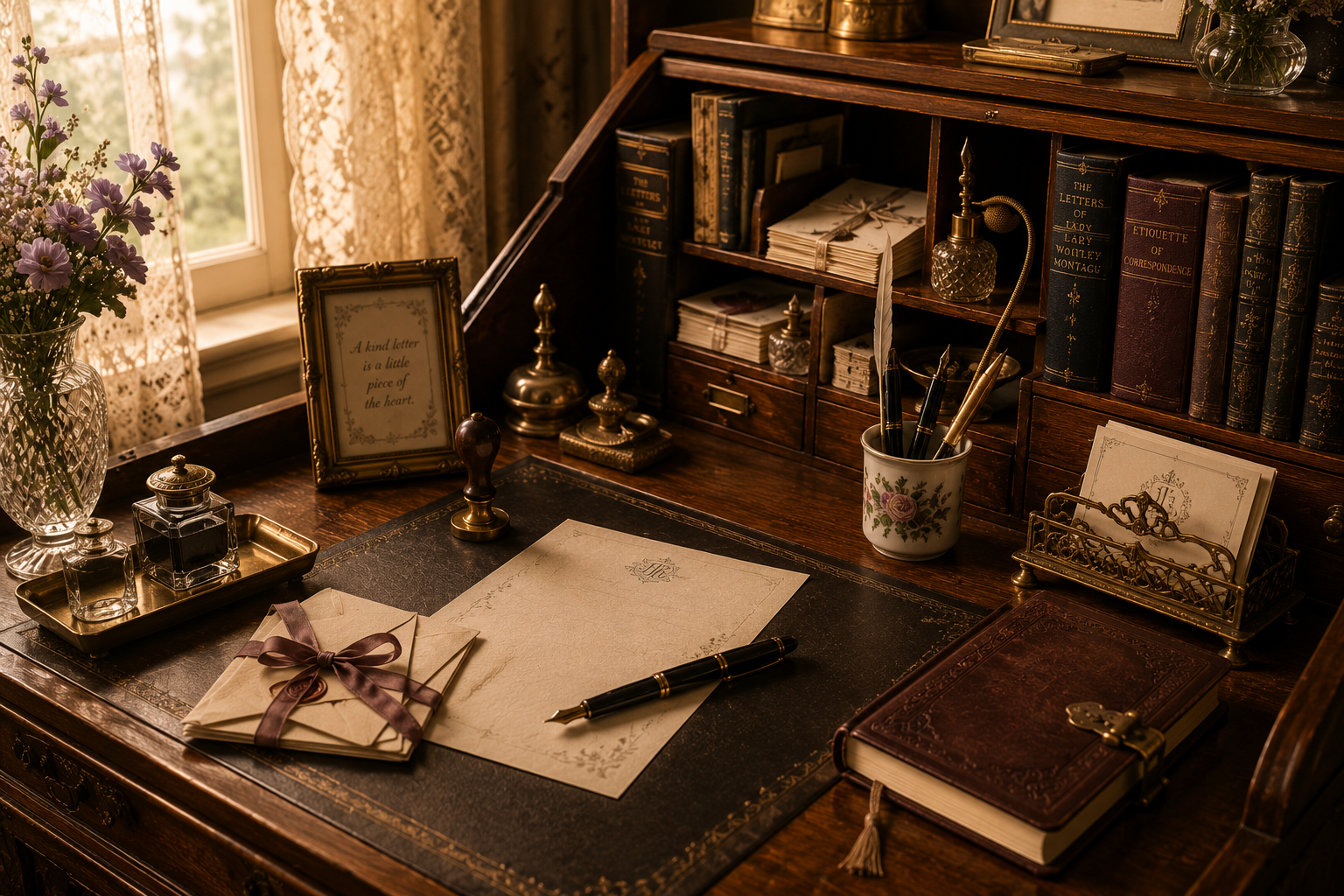
A dedicated writing desk was both practical and personal. It held stationery, stamps, envelopes, address books, pens, blotting paper and the small instruments needed to conduct one’s correspondence with grace.
One does not require a grand secretary desk to revive this custom. A small table, a drawer, a wooden box or even a well-kept basket can become a place for letters. What matters is creating a setting that makes the act feel inviting rather than burdensome.
A simple correspondence corner might include:
- Paper that feels pleasant in the hand.
Cream, ivory or softly textured sheets give even a brief note a sense of occasion. - A dependable pen.
A fountain pen is lovely, though any pen that writes smoothly and comfortably will do. - Envelopes and stamps kept together.
Removing small inconveniences makes it far more likely that a finished letter will be sent. - An address book.
A handwritten record of names, addresses, birthdays and anniversaries becomes a useful household treasure. - One beautiful detail.
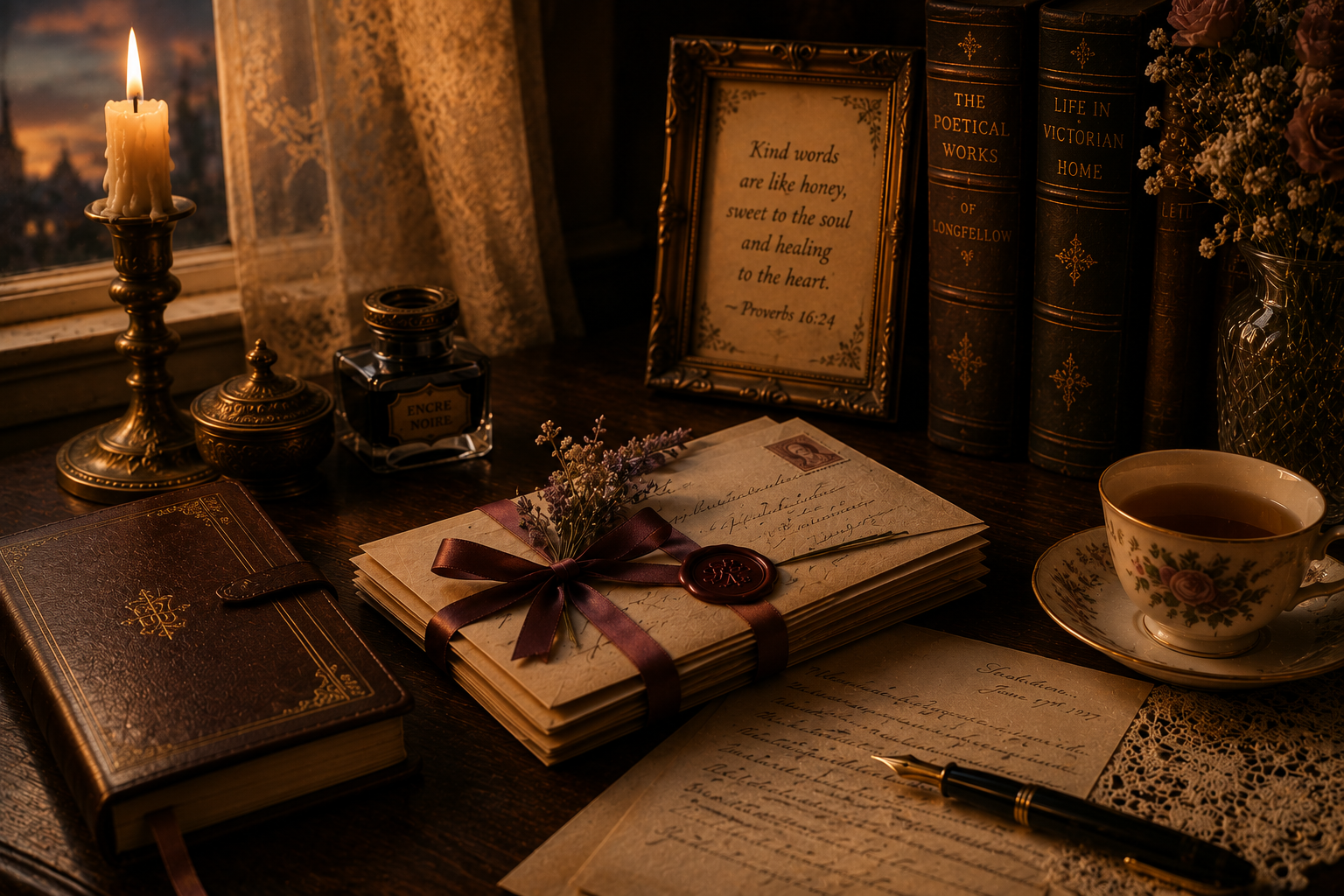
A vase of flowers, a candle, a framed photograph or a small tray can turn the space into a welcome ritual.
The Ritual of Correspondence
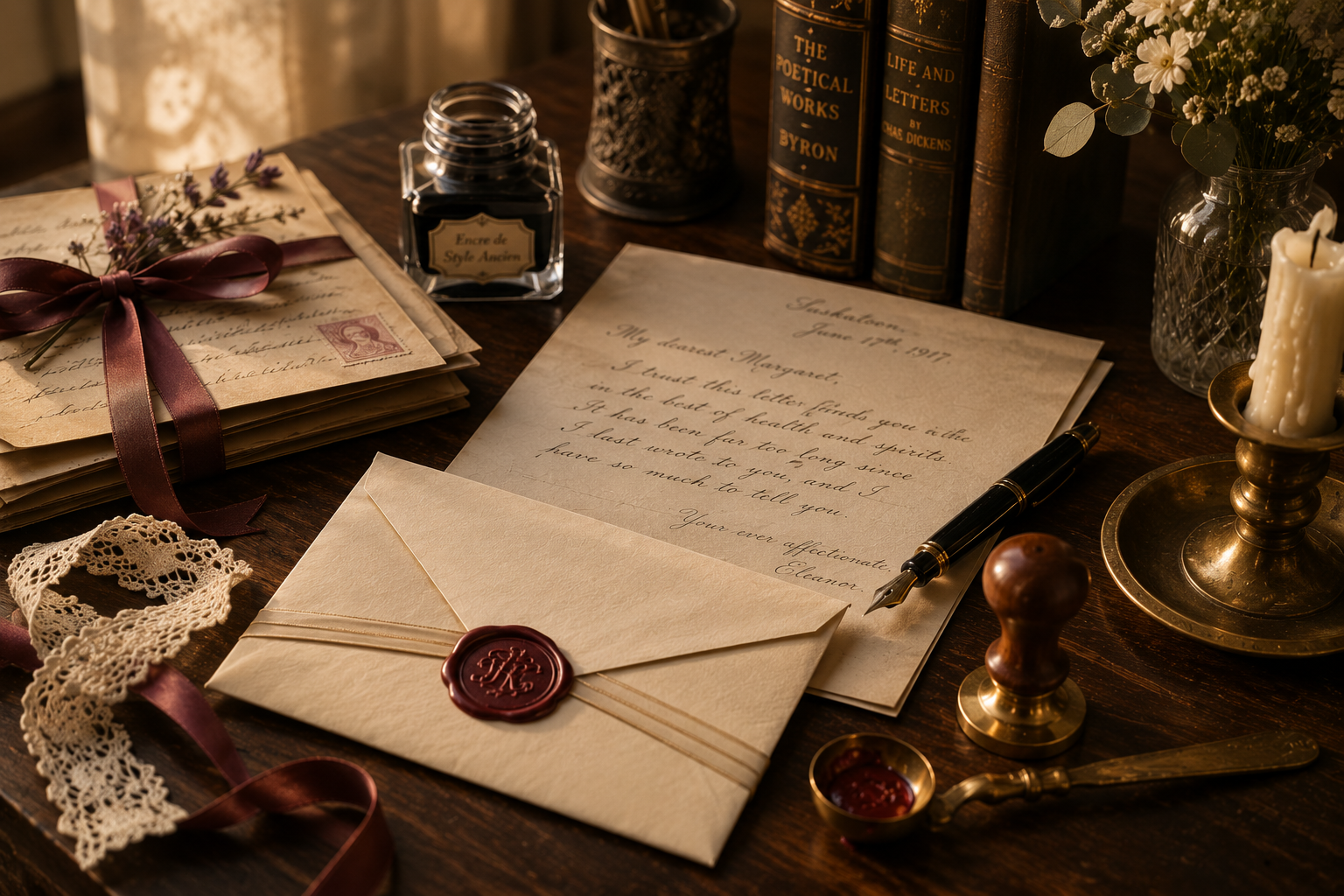
The charm of letter writing is found partly in its deliberate sequence. The paper is selected. The date and place are written at the top. A greeting opens the door, and then the writer begins as though the recipient were seated nearby.
There is no need to sound literary. The best letters often move naturally from one subject to another: news from home, an observation from the garden, a book recently enjoyed, a memory unexpectedly recalled or a question that invites a reply.
When the final words are written, the letter is folded, placed in its envelope and addressed by hand. A wax seal may add ceremony, but it is not essential. The real beauty lies in the completion of the act—the transformation of private thought into something another person can hold.
The Gift of Being Remembered
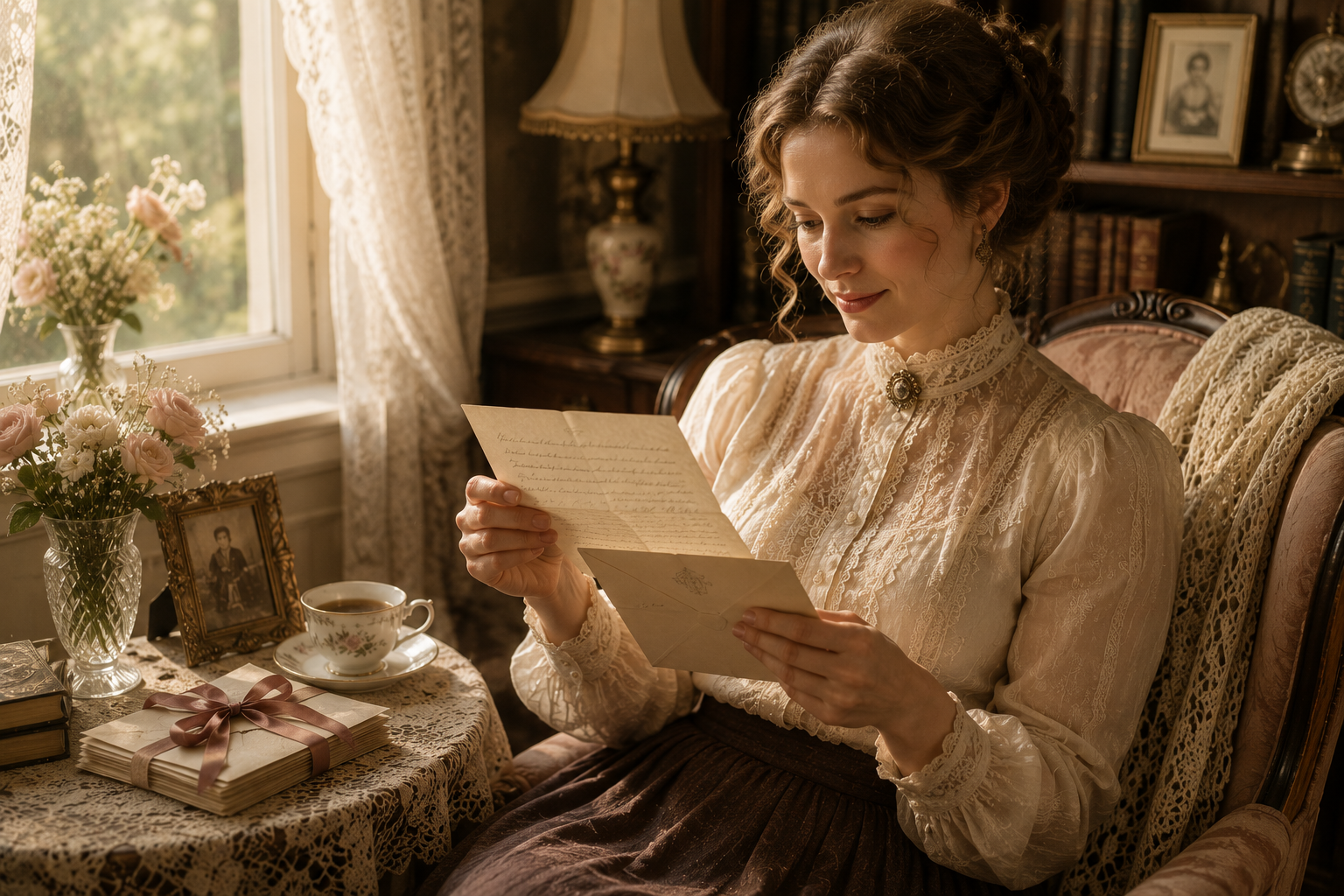
To receive a personal letter among bills, advertisements and official envelopes is still a small astonishment. Before it is even opened, the handwriting announces the sender. The envelope has travelled. The paper has been touched by familiar hands.
Unlike a passing digital message, a letter can remain on the mantel, inside a book or tucked into a bedside drawer. It can be returned to when encouragement is needed. It can be shared with a child or preserved for a grandchild. Its meaning may deepen rather than disappear with time.
Perhaps that is why old bundles of letters affect us so strongly. They remind us that relationships are built not only through great events, but through repeated acts of attention. A person was remembered, and the remembrance was given form.
A Closing Reflection
Begin With One Letter
We need not abandon modern communication to preserve this older art. We need only make room for it again.
Choose one person. Set aside twenty quiet minutes. Write what you have been meaning to say, add one small story from your life and ask a question that welcomes an answer. Place the letter in the post before perfection has time to interfere.
Somewhere, perhaps days from now, an envelope bearing your handwriting will arrive. Someone will pause before opening it. For a little while, the hurried world will grow quiet—and your words will keep another person company.
A letter does not need to change a life to matter. Sometimes it is enough to remind another person that, in the midst of an ordinary day, they were remembered.
From the parlour, with affection.
Join the Monthly Newsletter