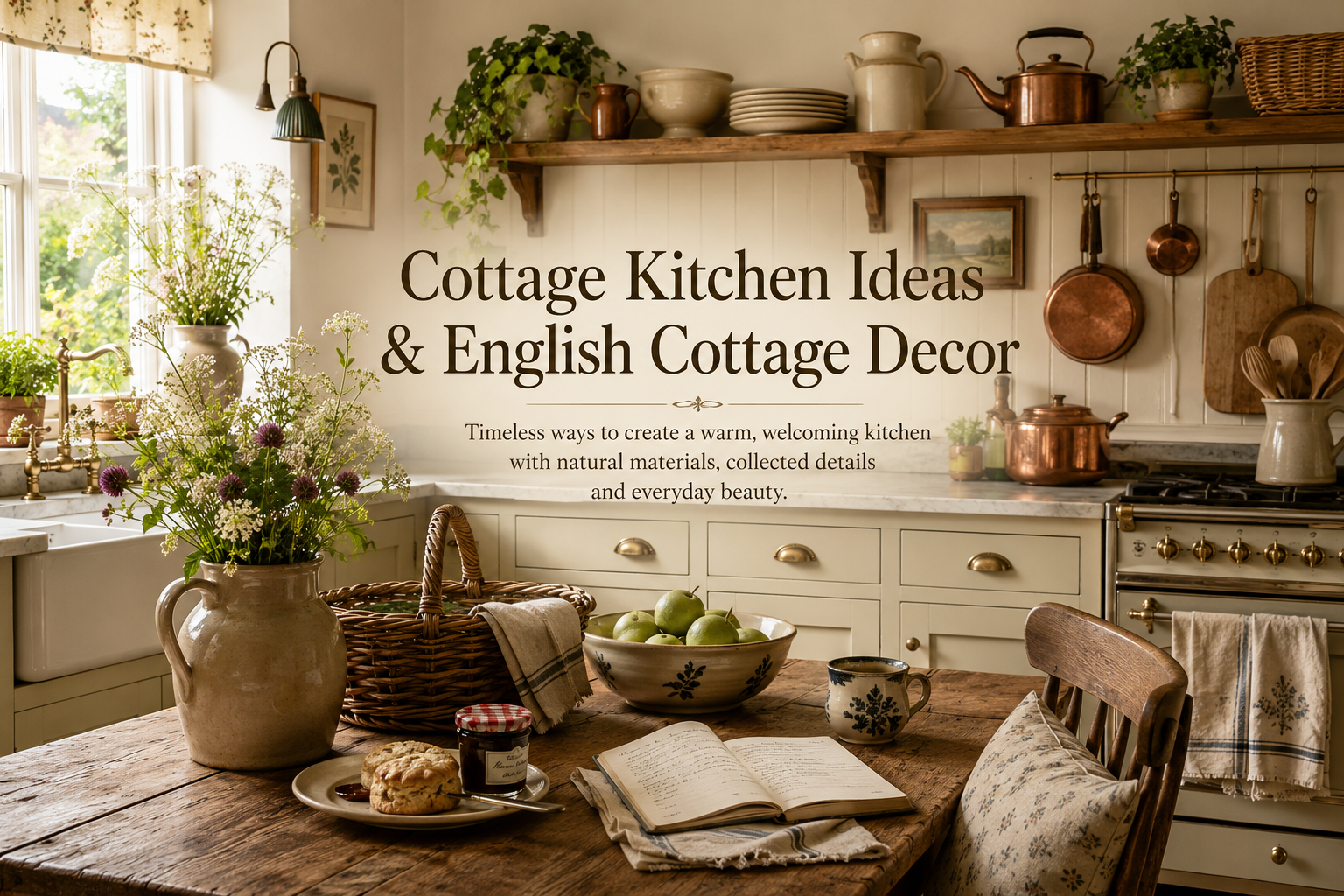
Cottage Kitchen Ideas & English Cottage Decor
Timeless ways to create a warm, welcoming kitchen with natural materials, collected details and everyday beauty.
The loveliest cottage kitchens seldom look as though they were completed all at once. They appear to have grown slowly—one stoneware bowl, wooden spoon, old recipe and useful basket at a time.
Their charm comes not from perfection, but from familiarity. A kettle waits near the stove, herbs grow beside the window, bread rests beneath a linen cloth, and shelves hold the dishes used every day.
Whether your kitchen is large or small, these ideas can help you create a room that feels settled, useful and genuinely welcoming.
What Makes a Cottage Kitchen Feel Authentic?
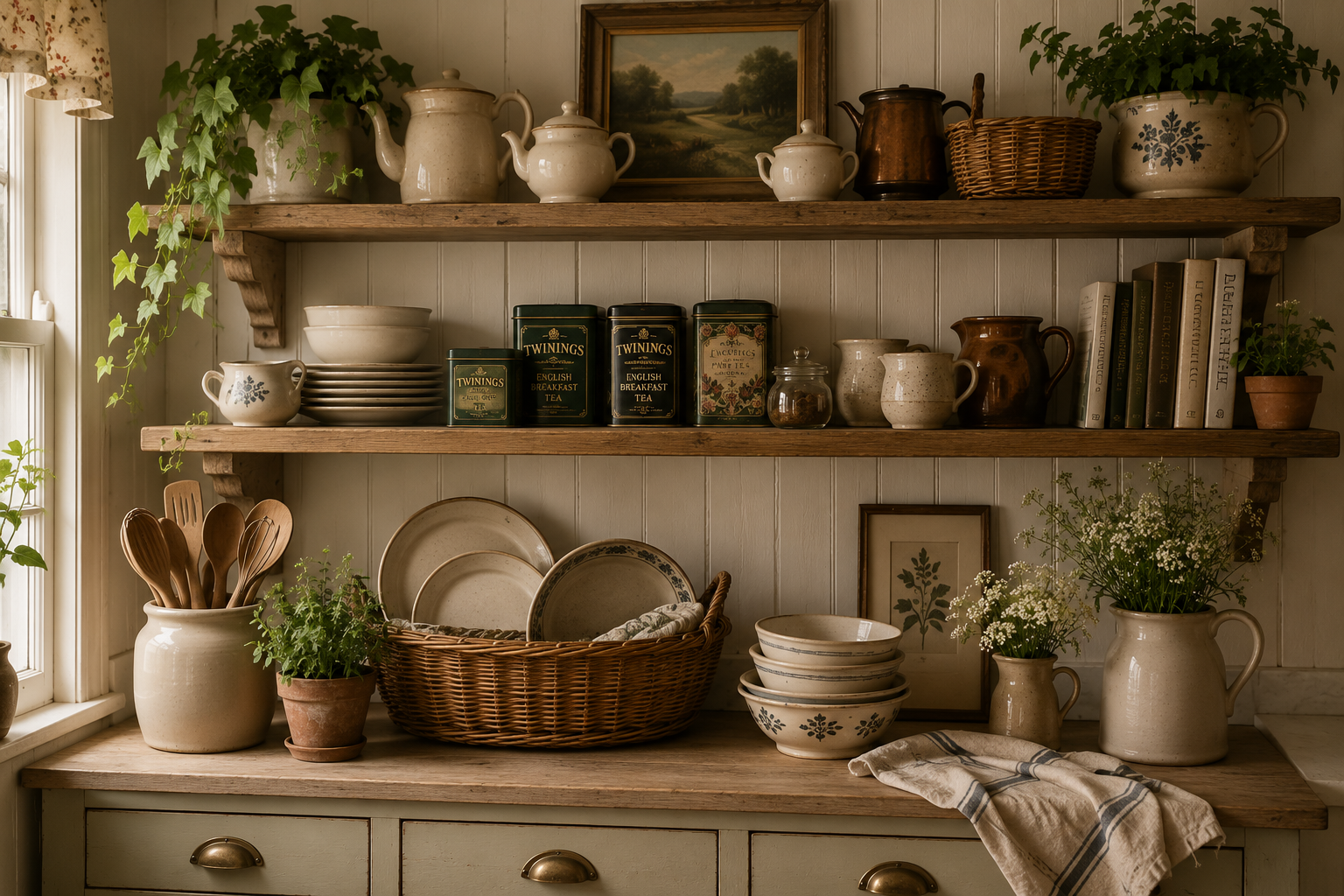
A convincing cottage kitchen does not depend upon matching sets or perfectly coordinated accessories. It feels layered and gathered, with useful objects that become more beautiful through familiarity and use.
Begin with materials that age gracefully: honest wood, cream pottery, linen, wicker, copper and glass. These elements soften a room and prevent new furnishings from feeling too polished.
Ideas to try
- Display frequently used bowls and plates on open shelving.
- Store wooden spoons together in a pottery crock.
- Lean well-used cutting boards against the backsplash.
- Add baskets for linens, produce or baking supplies.
- Mix old-fashioned pieces with practical modern essentials.
Collected cottage details
Create a Cottage Kitchen Tea Corner
A tea corner transforms a small portion of the kitchen into a place of pause. It may be no more than a kettle, a favourite teapot and several tins arranged together on a tray, shelf or wooden counter.
Keep the pieces you use most within easy reach. Add a small plant, a framed print or a folded linen cloth so the corner feels intentional without becoming impractical.
The best tea stations are not displays that remain untouched. They invite use—morning after morning and cup after cup.
Include only what you enjoy using
- A kettle that can remain attractively on display.
- A ceramic teapot and several favourite cups.
- Tea tins or a divided wooden tea box.
- A small tray for milk, sugar and spoons.
- A linen cloth, flowers or potted herbs.
For the tea corner
Read The Ritual of Afternoon Tea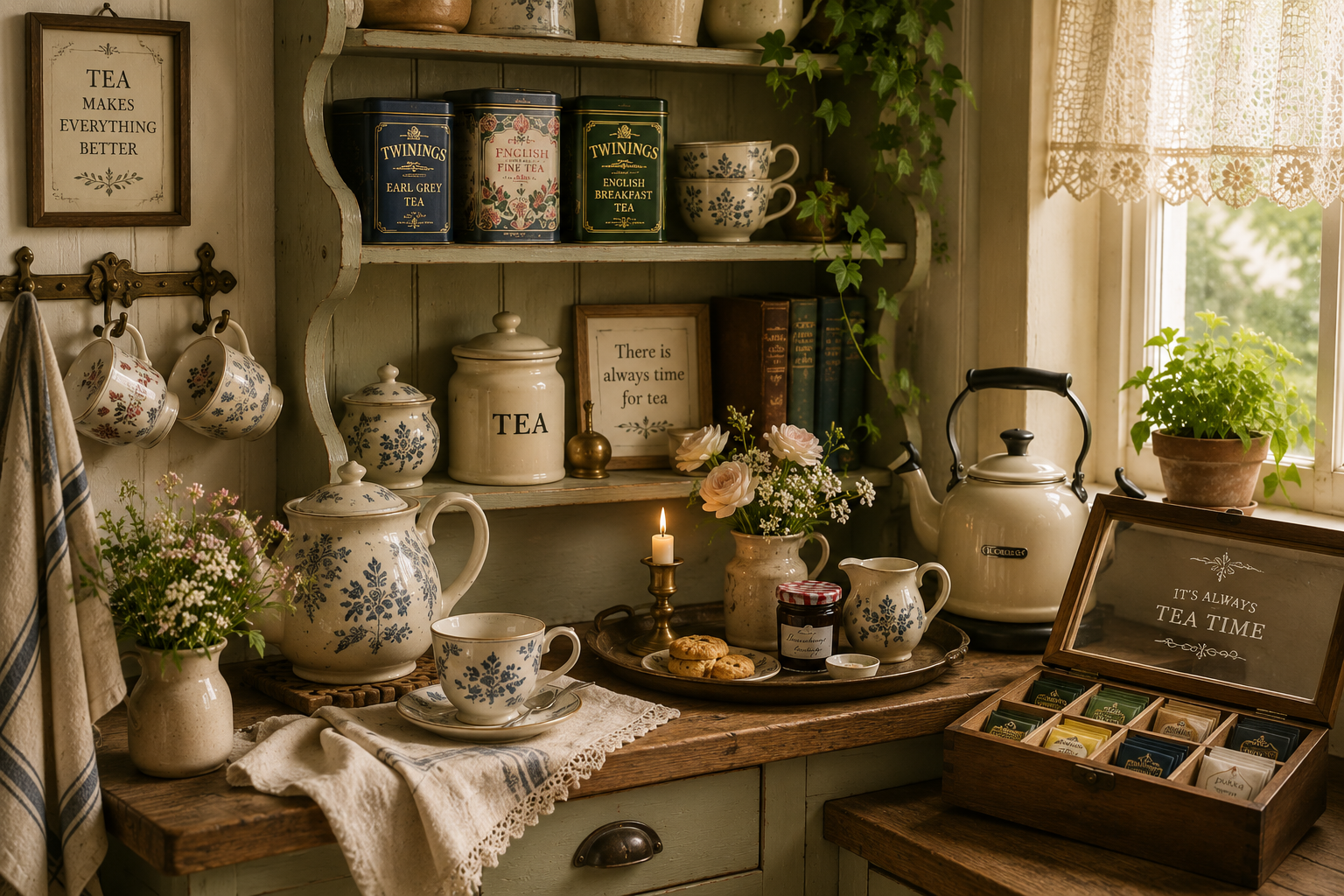
Let the Kitchen Table Welcome Everyday Life
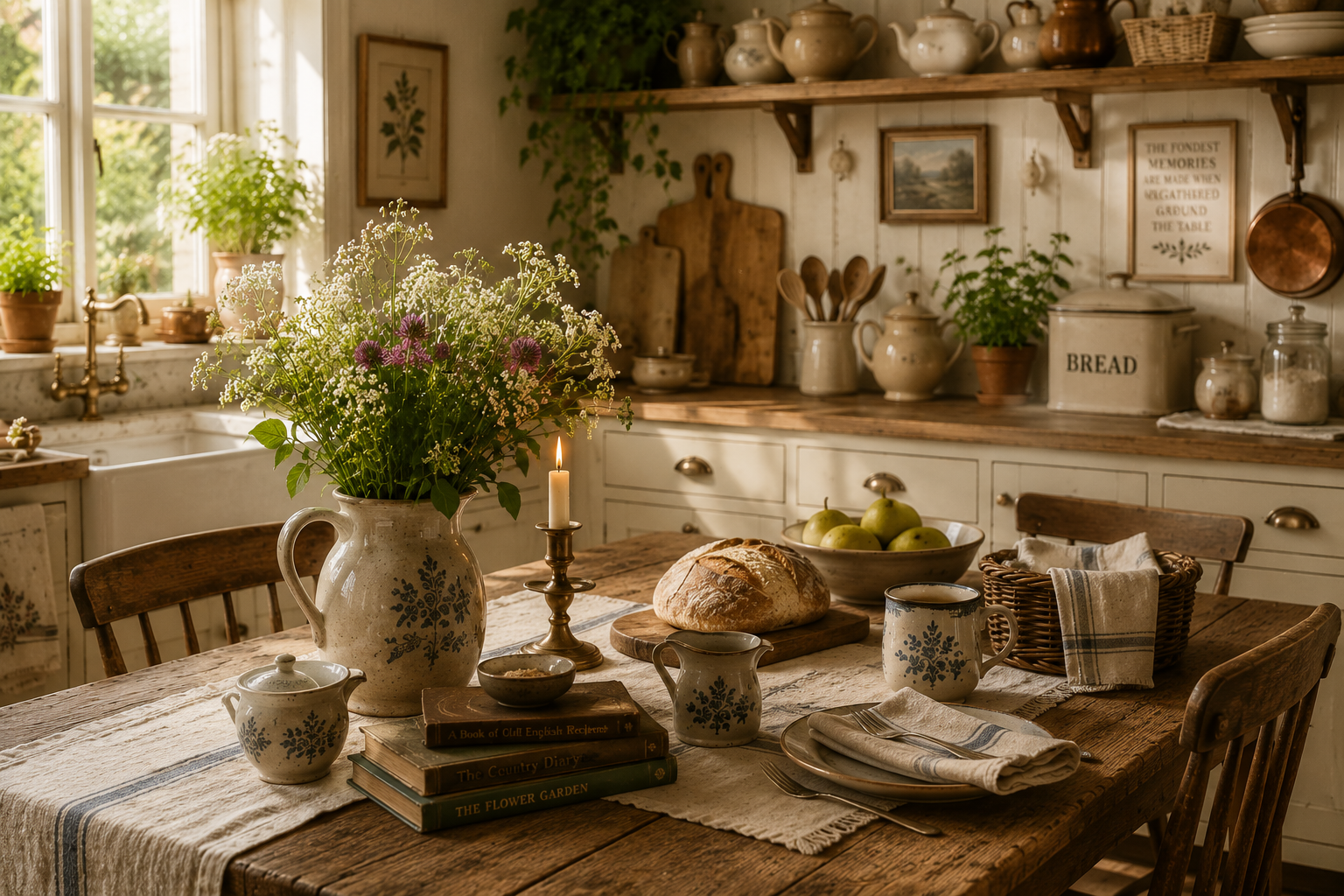
In a traditional cottage kitchen, the table is more than a place to eat. It is where vegetables are prepared, letters are opened, dough is kneaded, flowers are arranged and visitors are offered tea.
Rather than covering the table with elaborate decoration, choose a few things that can remain without interrupting daily life: a pitcher of flowers, a shallow fruit bowl, a folded runner or a simple candleholder.
Simple table details
- A natural linen runner or folded tea towel.
- A stoneware pitcher filled with garden flowers.
- A wooden board for bread, cheese or fruit.
- A woven basket for napkins or fresh rolls.
- A brass candleholder for darker mornings and evenings.
For a welcoming table
Choose Natural Materials and Practical Storage
Cottage style works especially well in kitchens because many ordinary necessities are attractive in their own right. Flour in a clear glass jar, folded linens in a basket and wooden utensils in a pottery crock provide both order and warmth.
Avoid filling every available surface. A little open space allows the room to breathe and gives favourite objects greater presence.
Materials that suit the cottage kitchen
- Wooden boards, spoons and recipe boxes.
- Wicker and wire baskets for informal storage.
- Stoneware crocks, bowls and pitchers.
- Clear jars for grains, flour, rice and dried goods.
- Enamel containers and traditional bread boxes.
Useful cottage storage
Make Room for Baking Traditions
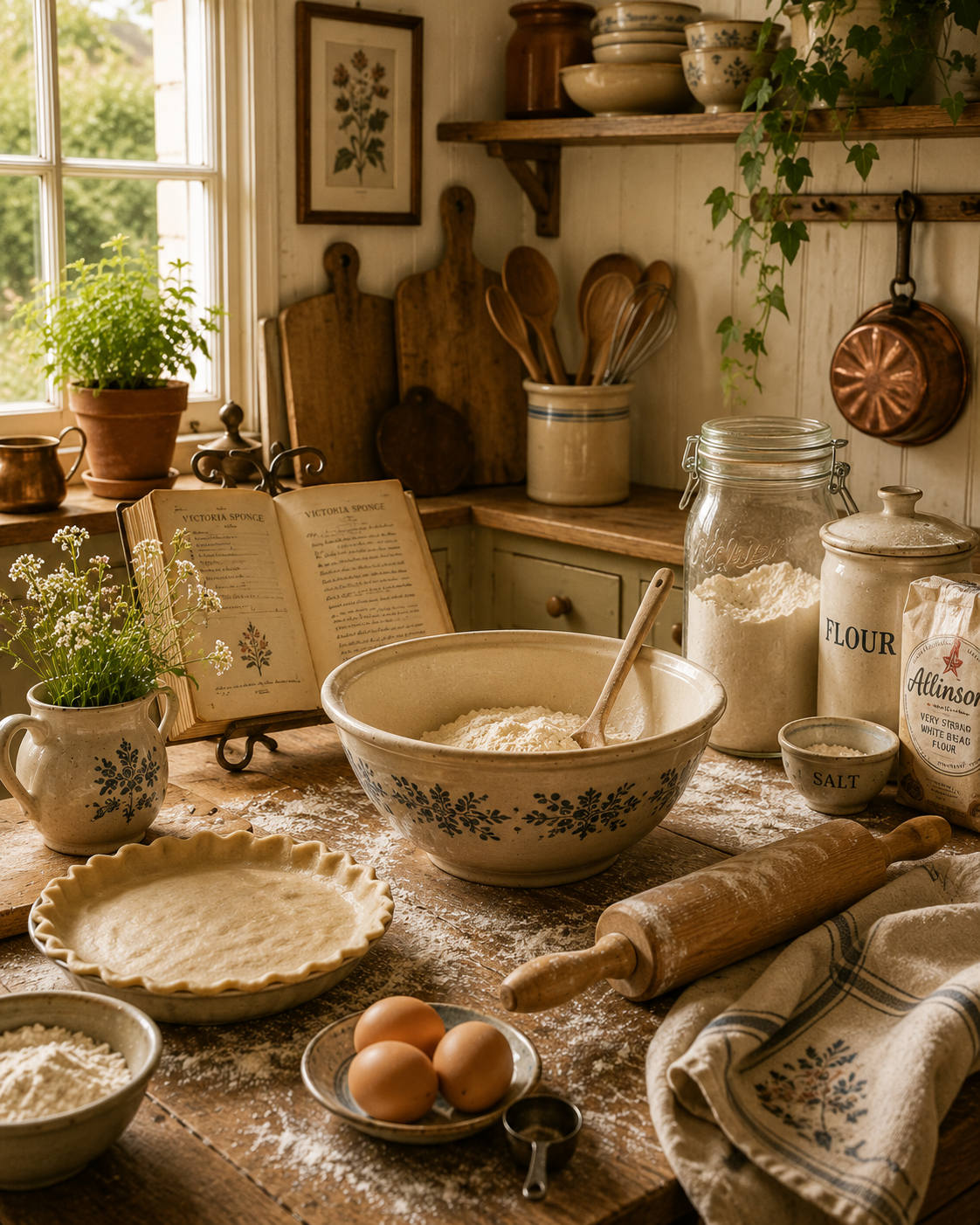
Home baking belongs naturally within the cottage kitchen. Mixing bowls, wooden rolling pins and flour-dusted boards remind us that good rooms are shaped by what happens inside them.
A permanent baking station is not necessary. Keep essential tools together in one cupboard, basket or drawer so that preparing bread, biscuits or pastry feels easy rather than burdensome.
A simple baking collection
- A substantial ceramic mixing bowl.
- A traditional wooden rolling pin.
- Measuring cups and spoons kept together.
- Absorbent flour-sack towels.
- A cutting or pastry board large enough for kneading.
- A recipe box filled with trusted family favourites.
Traditional baking essentials
Use Warm Lighting to Change the Mood
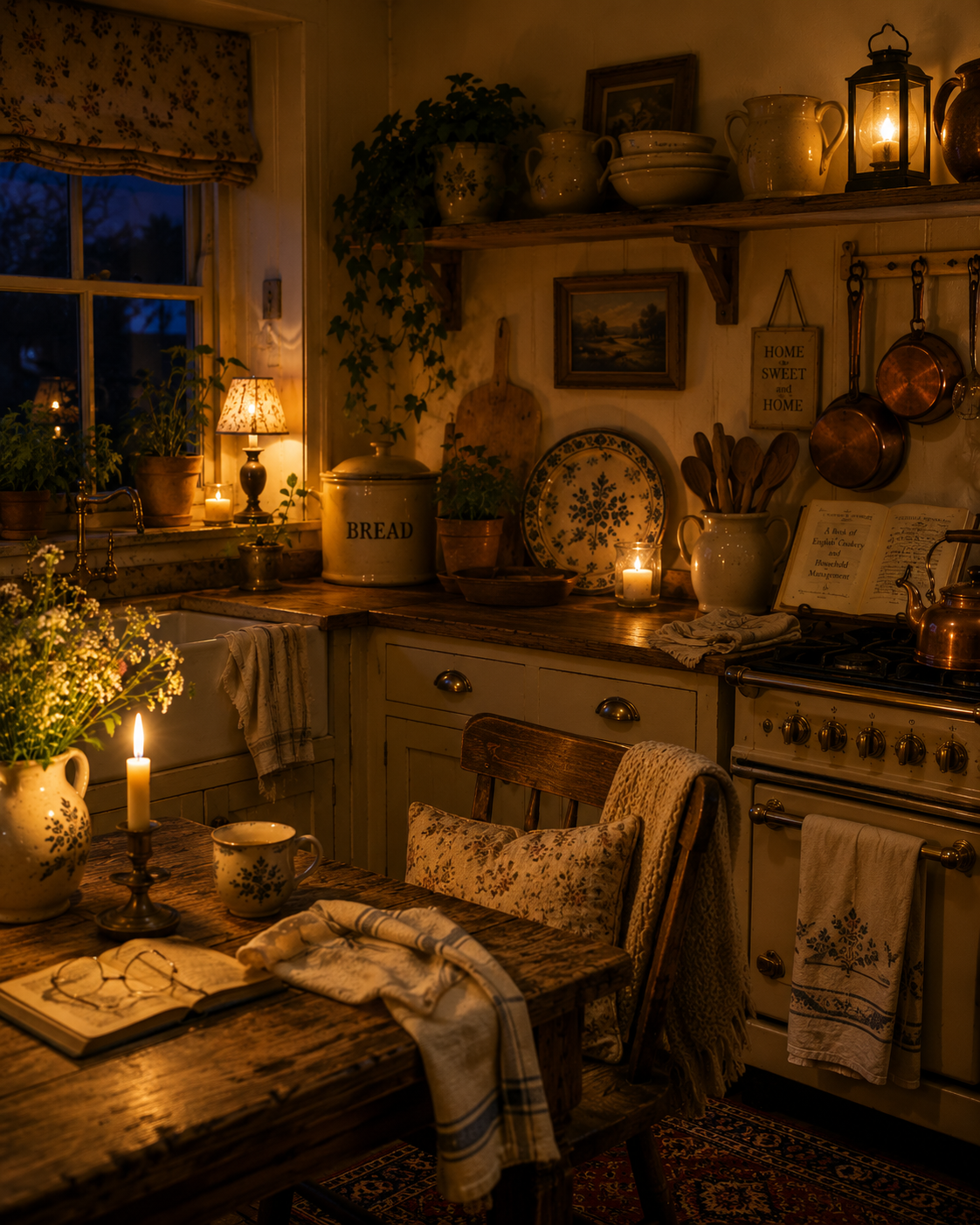
A kitchen that feels cheerful in daylight can become especially inviting after sunset. The secret is to rely upon several gentle sources of light rather than one harsh fixture overhead.
A small lamp beside the sink, a rechargeable lamp on an open shelf or a candle on the kitchen table can soften the entire room. Pendant lighting remains useful for work, while lower lamplight creates a quiet atmosphere once the day’s tasks are complete.
Layer the lighting
- Use pendant lights where practical work is performed.
- Add a small lamp to a counter, shelf or windowsill.
- Choose warm-toned bulbs rather than cold white light.
- Use candles safely during meals or quiet evenings.
- Allow darker corners to remain soft rather than overlit.
Warm kitchen lighting
Add Character Without Creating a Theme
English cottage decor is most convincing when used with restraint. A landscape painting, botanical print or old-fashioned clock can suggest history without making the kitchen resemble a stage set.
Choose pieces that appear connected to the room and to the people who live there. A framed herb illustration belongs near the kitchen garden window. A clock belongs where it can be read while bread bakes. A mirror may help a small kitchen reflect additional light.
Consider adding
- One or two botanical or landscape prints.
- An antique-inspired wall clock.
- A wood-framed mirror in a darker corner.
- Fresh herbs growing in simple clay pots.
- Old cookbooks displayed where they can be used.
Finishing touches
Begin with useful objects. Add natural materials. Display only what brings character or serves daily life. Then allow the room to evolve slowly.
Books for cottage inspiration
Decorating books are particularly helpful when they show complete rooms rather than isolated products. They can help you understand proportion, colour, texture and the relaxed layering that gives cottage interiors their warmth.
Cottage Kitchen Favourites
A considered selection of useful pieces for bringing warmth, tradition and everyday beauty into the kitchen.
Enamel Tea Kettle
A traditional kettle that can remain attractively displayed on the stove or beside a cottage tea corner.
View the kettleWooden Utensil Set
Natural wooden tools introduce warmth and remain gentle on stoneware, enamel and modern cookware.
View the utensilsRustic Bread Box
Practical covered storage that suits the traditional lines and useful character of a cottage kitchen.
View the bread boxGlass Storage Jars
Clear jars bring order to dry goods while allowing flour, grains and baking staples to become part of the room.
View the jarsWooden Recipe Box
A fitting home for family recipes, handwritten favourites and meals worth returning to season after season.
View the recipe boxCeramic Utensil Crock
Keeps frequently used kitchen tools close at hand while adding pottery texture to the countertop.
View the utensil crockWooden Rolling Pin
A familiar baking essential suited to pastry, biscuits and the simple traditions of the home kitchen.
View the rolling pinVintage Kitchen Scale
A useful old-fashioned accent for a baking area, open shelf or carefully arranged kitchen counter.
View the kitchen scaleHerb Planters
Bring fresh herbs to the windowsill and connect the kitchen with the garden throughout the growing season.
View the herb plantersRechargeable Lamp
A flexible source of warm evening light for shelves, counters, breakfast tables and corners without outlets.
View the lampBotanical Prints
Traditional plant illustrations provide subtle colour and a natural connection to herbs, flowers and the kitchen garden.
View the printsCozy White Cottage
A decorating book filled with approachable ideas for creating a home that feels relaxed, personal and welcoming.
View the book